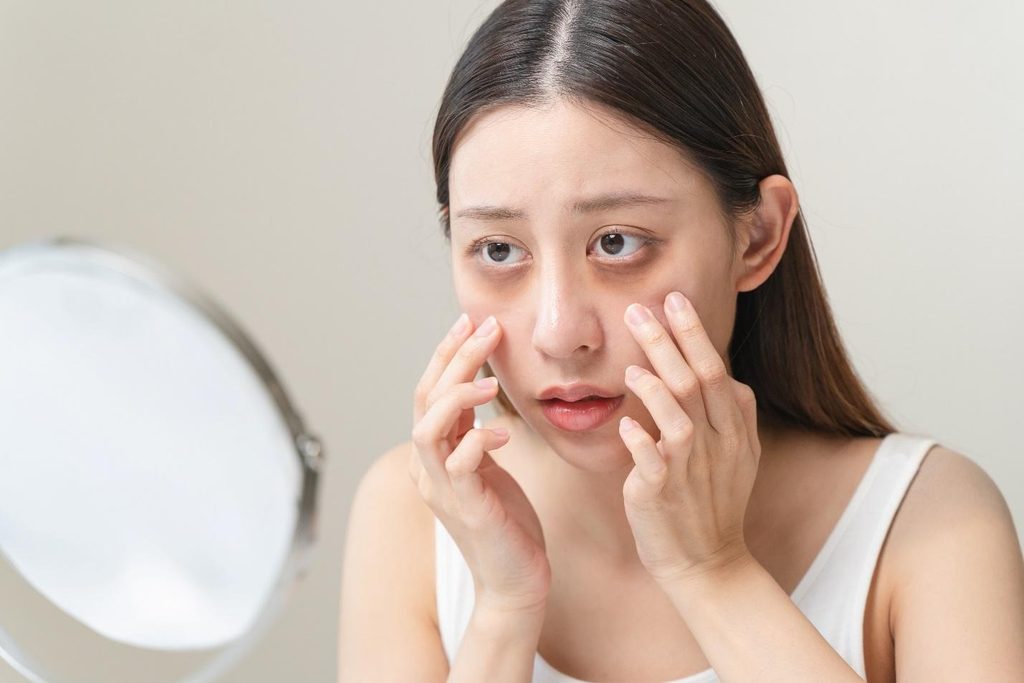
Dark eye circles can make you look tired even when you have had enough rest. However, the darkness beneath your eyes may not be caused by tiredness at all. Pigmentation, thin skin, visible blood vessels and tear trough hollowing can each contribute to a darker under-eye appearance.
Because these concerns require different approaches, there is no single treatment that works for every type of dark eye circle. Identifying the main cause or combination of causes is the first step towards choosing an appropriate treatment.
Dark eye circles may develop due to excess pigmentation, visible blood vessels beneath thin skin, age-related collagen loss or shadows created by under-eye hollowing. Allergies, irritation, sun exposure and lifestyle factors can also make them appear more noticeable.
Many people have more than one contributing factor, which is why identifying the underlying cause is important before selecting a treatment.
Read our guide on what causes dark eye circles for a closer look at the role of genetics, pigmentation, tiredness and facial anatomy.
The colour and appearance of your dark circles can provide clues about their cause. However, these features are not always reliable on their own, and more than one type may be present.
| Type | What it may look like | Main contributor |
| Pigmented | Brown or grey-brown discolouration that remains visible under different lighting | Excess melanin |
| Vascular | Blue, purple or reddish tones beneath the eyes | Blood vessels visible through thin skin |
| Structural | Darkness that becomes more or less noticeable depending on the lighting | Shadows caused by tear troughs or under-eye hollowing |
| Mixed | A combination of discolouration and shadowing | Multiple contributing factors |
During your assessment, our doctors will look at your skin thickness, pigmentation, facial anatomy, under-eye puffiness and how the darkness changes under different lighting. This provides a clearer picture of what is behind the darkness and which treatment may suit your needs.
The most suitable treatment depends on whether the darkness comes mainly from pigmentation, changes in the skin or shadows caused by volume loss. At Cove Aesthetic Clinic, our doctors may recommend treatments that target colour, support collagen production, improve hydration or soften under-eye hollowing.
Collagen Eye Laser may be considered when thin or ageing under-eye skin is making underlying blood vessels and shadows more visible. The treatment uses laser energy to stimulate collagen remodelling, helping to improve skin firmness, texture and the appearance of fine lines over time.
It may be suitable for:
Results develop gradually as the skin produces and remodels collagen. Depending on your skin condition and treatment goals, a series of sessions may be recommended.
Collagen Eye Laser does not directly remove excess pigmentation or restore volume to a pronounced tear trough. If pigmentation or structural hollowing is the main concern, another treatment may be more suitable.
Gold-X combines microneedling with radiofrequency energy to support collagen and elastin production beneath the skin. It is primarily used when fine lines, crepey texture or mild laxity are making the under-eye area look more tired.
It may be suitable for:
During treatment, fine needles create controlled micro-injuries while delivering radiofrequency energy into the skin. This activates the skin’s repair response and supports gradual collagen remodelling. Research has explored radiofrequency microneedling for periorbital dark circles, particularly where skin quality contributes to their appearance.
Temporary redness, swelling, sensitivity or small treatment marks may occur afterwards. Results develop progressively, and a series of treatments may be recommended depending on your skin condition and treatment goals.
Gold-X does not restore volume to a tear trough or directly target excess melanin. Another treatment may be more appropriate when structural hollowing or pigmentation is the main cause of the darkness.
Bright Eye Laser may be considered when dark circles are primarily caused by excess pigmentation. These circles typically appear brown or grey-brown and remain visible under different lighting.
It may be suitable for:
The laser delivers energy that targets excess melanin within the skin. The body gradually clears the treated pigment, helping the under-eye area appear more even over time. Treatment settings are selected according to your skin type, the nature of the pigmentation and the sensitivity of the eye area.
Temporary redness, sensitivity or darkening of the treated pigment may occur after treatment. Pigmentation usually improves progressively, and several sessions may be recommended depending on its type, depth and extent.
Bright Eye Laser does not restore volume to a tear trough or address darkness caused mainly by thin skin and visible blood vessels. If several factors are contributing, it may form part of a combination treatment plan.
Some dark circles are caused or accentuated by a hollow between the lower eyelid and cheek. This hollow can create a shadow that makes the undereye area appear darker, particularly under overhead lighting.
Undereye filler may be suitable for:
During treatment, filler is carefully placed beneath the eyes to soften the hollow and create a smoother transition between the lower eyelid and cheek. This improves the contour responsible for the shadow rather than changing the colour of the skin.
The improvement may be visible shortly after treatment, although swelling must settle before the final result can be assessed. How long the result lasts varies according to the filler used, the amount injected and how the individual responds.
Temporary swelling, bruising, tenderness, lumpiness or asymmetry may occur. The under-eye area also has complex vascular anatomy, and filler carries rare but serious risks such as vascular occlusion. Careful assessment, product selection and injection technique are therefore important.
Undereye filler does not remove pigmentation or treat visible blood vessels beneath thin skin. It may also be unsuitable for patients with prominent eye bags, fluid retention or certain anatomical features.
Eye Skin Boosters are injectable treatments that focus on hydration and texture. They may be an option when the under-eye area looks dry, crepey or tired but does not require significant volume correction.
They may be suitable for:
Small amounts of an injectable formulation are placed within the skin to support hydration and improve its texture. The ingredients and intended effects vary between products, so our doctors will recommend an option based on your skin condition and concerns.
Temporary redness, swelling, tenderness, bruising or small injection marks may occur. Results and the recommended number of sessions depend on the formulation used and your individual response. Maintenance treatments may be recommended over time.
Unlike tear trough filler, Eye Skin Boosters are intended to improve skin quality rather than restore significant volume. They also do not directly remove pigmentation or correct pronounced under-eye hollowing.
There is no single best treatment for dark eye circles. The appropriate option depends on whether the main concern is pigmentation, skin quality, dehydration or structural hollowing.
| Main concern | Treatment option | What it addresses | Possible effects after treatment |
| Thin or ageing skin | Collagen Eye Laser | Collagen loss, fine lines and skin firmness | Redness or sensitivity, depending on the laser settings |
| Crepey texture or mild laxity | Gold-X | Skin texture, firmness and collagen remodelling | Temporary redness, swelling, sensitivity or treatment marks |
| Brown pigmentation | Bright Eye Laser | Excess melanin and uneven under-eye tone | Temporary redness, sensitivity or darkening of treated pigment |
| Dehydrated skin and fine lines | Eye Skin Boosters | Hydration and overall skin quality | Temporary swelling, bruising or injection marks |
| Tear trough hollowing | Undereye Filler | Volume loss and structural shadowing | Temporary swelling, bruising, tenderness or asymmetry |
This comparison is only a guide and should not be used to diagnose your dark circles. Our doctors can assess the colour, skin quality and structure of your under-eye area to determine which factor is contributing most to its appearance.
Dark eye circles often have more than one contributing cause. For example, pigmentation may occur alongside thin skin, while tear trough hollowing may create additional shadowing beneath an already darker under-eye area.
In these cases, our doctors may recommend a combination or staged treatment plan. Each treatment is selected to address a specific concern, such as using a pigment-targeting laser for discolouration and a separate treatment for skin quality or structural hollowing.
The focus is not on doing more, but on choosing treatments that address the concerns affecting your under-eye area without overtreating this delicate skin.
Not always. Treatment may reduce pigmentation, improve skin quality or soften shadows caused by under-eye hollowing, but the degree of improvement depends on the underlying cause.
Certain contributing factors, such as inherited facial anatomy, naturally thin skin and the ageing process, cannot be permanently eliminated. Dark eye circles may also have several causes, so treating one component may improve their overall appearance without removing the darkness completely.
The goal of treatment is therefore to achieve a noticeable but natural-looking improvement rather than promise complete or permanent removal.

Pigmentation, thin skin and tear trough shadows can create a similar-looking concern, but they do not respond to the same treatments.
At Cove Aesthetic Clinic, our doctors assess your under-eye skin, facial anatomy and treatment goals before recommending an individualised plan. This may include laser treatment, radiofrequency microneedling, Eye Skin Boosters, tear trough filler or a combination of treatments.
Schedule a consultation with Cove Aesthetic Clinic to learn which options may be suitable for you.
Our doctors assess the colour of the under-eye area, skin thickness and quality, visible blood vessels, tear trough depth, lower-eyelid puffiness and how the darkness changes under different lighting. This helps determine whether pigmentation, skin changes, structural shadowing or a combination of factors is contributing.
Sleep is only one factor that affects the under-eye area. Pigmentation, thin skin, visible blood vessels, facial anatomy and age-related volume loss can all cause persistent dark circles even when you are well rested.
Pigmentation usually remains visible under different lighting, while structural shadows may change depending on the direction of the light. However, both can occur together, so an assessment is more reliable than judging the cause by colour alone.
The number of sessions depends on the cause of your dark circles, the treatment selected and how your skin responds. Laser, radiofrequency microneedling and Eye Booster treatments may involve a series of sessions, while tear trough filler may produce a visible contour change after one appointment.
This varies according to the treatment. Pigmentation can recur, collagen and skin quality continue to change with age, and injectable treatments are gradually absorbed by the body. Maintenance treatment may be recommended to preserve the improvement.
No. Dark eye circles refer to discolouration or shadowing beneath the eyes, while eye bags describe bulging or puffiness of the lower eyelid. The two may occur together, and an eye bag can create a shadow that makes the under-eye area look darker.