At a glance:
| What causes dark eye circles | Genetics, pigmentation, visible blood vessels, ageing and lifestyle factors. |
| Are they always caused by poor sleep? | No. Fatigue often makes them more noticeable but is rarely the only cause. |
| Why do they vary from person to person? | Many people have a combination of contributing factors rather than a single cause. |
| How are they treated? | Treatment depends on the underlying cause and may involve collagen-stimulating or pigment-targeting treatments. |
| When should I see a doctor? | If your dark eye circles are persistent or you’re considering treatment, an assessment can help identify the most appropriate approach. |

Dark eye circles are one of the most common concerns seen in aesthetic practice. They can make you look tired, stressed or older than you feel, even after a full night’s sleep. While many people assume they are simply the result of fatigue, persistent dark eye circles are often caused by a combination of genetics, pigmentation, facial anatomy and the natural ageing process.
Understanding the underlying cause is important because not all dark eye circles develop in the same way. For some people, excess pigmentation is responsible, while others have naturally thin under-eye skin, prominent blood vessels or tear troughs that create shadowing. In many cases, several factors contribute at the same time. Identifying which of these mechanisms are involved is the first step towards choosing the most appropriate treatment.
The most common causes of dark eye circles include:
Understanding which of these factors is responsible is important because treatment depends on the underlying cause. What works for pigmentation, for example, may not be effective for shadowing caused by tear troughs or age-related volume loss.
Some people are simply more predisposed to developing dark eye circles than others. Genetics can influence facial anatomy, skin thickness and melanin production, all of which affect the appearance of the under-eye area. For example, naturally thinner skin may make blood vessels more visible, while deeper tear troughs can create shadows that resemble pigmentation. This is why some people have noticeable dark circles from a young age despite getting enough sleep and maintaining a healthy lifestyle.
Pigmentation occurs when excess melanin accumulates beneath the eyes, causing the skin to appear brown or darker than the surrounding area. It may be influenced by genetics, sun exposure or repeated rubbing caused by allergies or eczema. Unlike shadows, pigmented dark circles represent a genuine change in skin colour and remain visible regardless of lighting conditions.
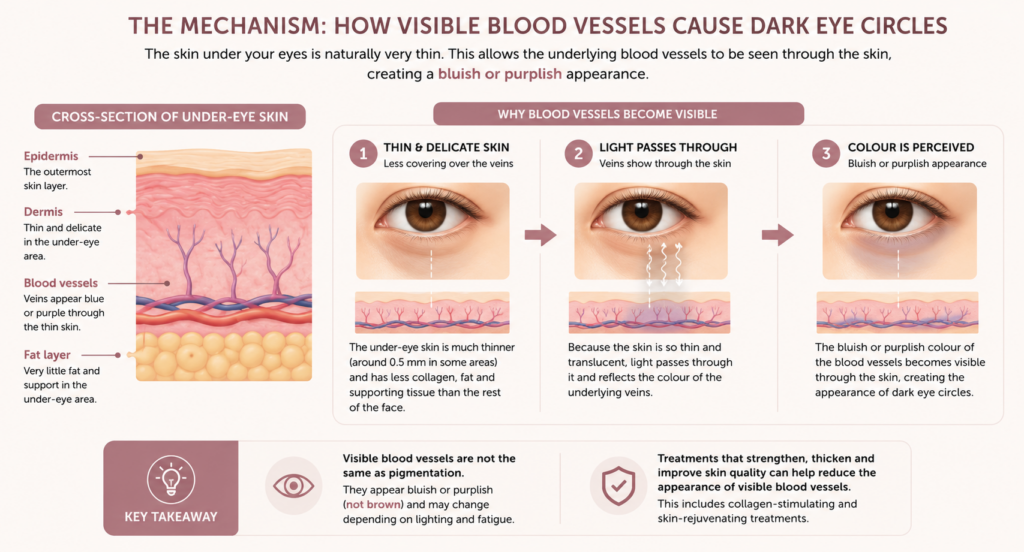
The skin beneath the eyes is naturally very thin, allowing the underlying blood vessels to show through. This can give the under-eye area a bluish or purplish appearance, particularly in individuals with fairer skin or naturally thinner skin. Visible blood vessels may also become more noticeable with age as collagen declines and the skin becomes increasingly translucent.
As we age, collagen production gradually declines, causing the skin beneath the eyes to become thinner and less supportive. At the same time, facial volume decreases, which can deepen the tear trough and create shadows beneath the eyes. Together, these changes can make dark eye circles appear more noticeable, even if they were less obvious when you were younger.
Lifestyle factors such as poor sleep, dehydration, allergies and smoking can make dark eye circles appear more noticeable, but they are rarely the sole cause. Instead, they tend to exaggerate existing pigmentation, visible blood vessels or shadows beneath the eyes. If your dark circles persist despite getting enough rest, there is likely to be an underlying factor contributing to their appearance.
Dark eye circles are rarely caused by a single factor. In many cases, they develop through a combination of genetics, pigmentation, visible blood vessels, age-related changes and lifestyle factors.
For example, someone may naturally have thin under-eye skin that makes blood vessels more visible, while also developing pigmentation from years of sun exposure. Another person may have inherited deeper tear troughs that become more pronounced as collagen declines with age.
Because several factors often overlap, there is no one-size-fits-all treatment for dark eye circles. Identifying the underlying causes is the first step towards recommending the most appropriate treatment plan for each individual.
There is no “best” treatment for dark eye circles because there is no single cause. The most appropriate treatment depends on whether your dark circles are caused by pigmentation, visible blood vessels, age-related changes, facial anatomy or a combination of these factors.
| Underlying cause | Possible treatment approach |
| Pigmentation | Pigment-targeting laser treatments |
| Visible blood vessels / Skin thinning | Treatments that stimulate collagen to improve skin thickness and overall skin quality |
| Age-related skin laxity | Treatments that tighten the skin and encourage collagen remodelling |
| Tear trough hollows or structural shadowing | Dermal fillers for suitable individuals |
| Dehydration or reduced skin quality | Eye boosters that support hydration and skin quality |
| Multiple contributing factors | A personalised treatment plan combining different treatment modalities |
At Cove Aesthetic Clinic, every treatment plan begins with a comprehensive assessment of your skin, facial anatomy and the underlying causes of your dark eye circles. By identifying whether pigmentation, skin thinning, structural changes or a combination of factors are involved, our doctors can recommend a personalised treatment plan designed to achieve natural-looking, refreshed results.
When dark eye circles are associated with thin skin, visible blood vessels or early signs of ageing, treatments that stimulate collagen may help improve the appearance of the under-eye area. By encouraging natural collagen production, the skin gradually becomes firmer and more resilient, helping to reduce the visibility of underlying blood vessels while improving overall skin quality.
The Collagen Eye Laser is a non-invasive treatment designed specifically for the delicate eye area. Using medical-grade laser technology, it stimulates collagen remodelling to improve skin firmness, soften fine lines and brighten tired-looking eyes. Because it works by strengthening and rejuvenating the skin rather than simply masking the problem, it can be an effective option for patients whose dark eye circles are related to skin thinning and age-related changes.

For individuals whose dark eye circles are associated with collagen loss, thinning skin or early signs of ageing, collagen-stimulating treatments may help improve the appearance of the under-eye area. Rather than targeting pigmentation directly, these treatments work by strengthening the skin and improving its overall quality.
Gold-X (link to service page) combines radiofrequency energy with microneedling to stimulate collagen and elastin production deep within the skin. Around the eyes, this may help improve skin firmness, soften fine lines and support the delicate under-eye skin, making blood vessels and shadowing less noticeable over time.
Depending on your concerns, Gold-X may be recommended on its own or as part of a personalised treatment plan.
In some individuals, dark eye circles are caused or accentuated by tear trough hollows and other structural features that create shadows beneath the eyes. Tear trough fillers may be used to restore volume beneath the eyes and soften the transition between the lower eyelid and cheek, making shadowing less noticeable.
When dark eye circles are primarily caused by pigmentation, the Bright Eye Laser may be considered. The treatment uses laser energy to target excess pigment around the eyes, helping to gradually improve uneven skin tone and reduce the appearance of darkened under-eye skin.
Eye boosters are injectable treatments intended to improve hydration and overall skin quality around the eyes. Depending on the formulation used, they may help support smoother, more hydrated skin and soften the appearance of fine lines, giving the under-eye area a more refreshed appearance.
Dark eye circles are not all the same, and the most effective treatment starts with understanding what is causing them. At Cove Aesthetic Clinic, our doctors perform a comprehensive assessment of your skin, facial anatomy and under-eye concerns before recommending a personalised treatment plan. Whether your dark eye circles are caused by pigmentation, skin thinning or age-related changes, we’ll help you find the most appropriate treatment for brighter, more refreshed-looking eyes.
Schedule a consultation with our doctors for an individualised assessment and treatment plan.
In most cases, dark eye circles are harmless and are related to genetics, pigmentation, facial anatomy or the natural ageing process. However, in some individuals, they may become more noticeable alongside certain medical conditions such as iron deficiency anaemia, thyroid disorders, eczema or chronic allergic rhinitis.
If dark circles develop suddenly, are accompanied by other symptoms or are causing concern, it is advisable to consult a healthcare professional to rule out any underlying medical condition before considering aesthetic treatment.
They can. As collagen production gradually declines with age, the skin beneath the eyes becomes thinner and loses structural support. At the same time, facial fat pads shift and tear troughs may deepen, creating shadows that make dark circles appear more noticeable.
The rate and severity of these changes vary between individuals and are influenced by genetics, lifestyle factors and cumulative sun exposure.
Both men and women can develop dark eye circles for the same underlying reasons, including genetics, pigmentation, visible blood vessels and ageing.
However, hormonal changes may influence how the under-eye area changes over time. For example, women often experience accelerated collagen loss around menopause [7], which can contribute to thinner skin and more noticeable tear troughs. Men, on the other hand, generally have thicker skin, although age-related volume loss and collagen decline still occur gradually.
Ultimately, the underlying cause is more important than biological sex when determining the most appropriate treatment approach.
Skincare products may improve certain causes of dark eye circles, particularly those related to pigmentation, dehydration or overall skin quality. Ingredients such as retinoids, vitamin C, niacinamide and caffeine may help brighten the skin, improve texture or temporarily reduce puffiness. However, skincare alone cannot correct deeper tear troughs, replace lost facial volume or significantly thicken skin that has become thinner through collagen loss.
Because dark eye circles often have multiple contributing factors, some individuals may require professional treatments in addition to a consistent skincare routine.
Yes, most aesthetic treatments improve the appearance of dark eye circles, but they do not stop the natural ageing process or permanently prevent future collagen loss and pigmentation changes. Depending on the underlying cause and the treatment performed, maintenance sessions may be recommended to help preserve results over time.
The colour of your dark eye circles can provide clues about the underlying cause. Brown dark circles are more commonly associated with excess pigmentation (melanin), while blue or purplish dark circles are often caused by visible blood vessels beneath thin under-eye skin. Some individuals have a combination of both, which is why a professional assessment is important before treatment.
Some causes of dark eye circles, such as genetics and the natural ageing process, cannot be prevented. However, protecting the skin from sun exposure, managing allergies, avoiding excessive eye rubbing, getting adequate sleep and maintaining good skin health may help reduce factors that can make dark circles appear more noticeable.
Doctors assess several factors, including your skin colour, skin thickness, facial anatomy, tear trough depth and the colour of the under-eye area. They may also ask about your medical history, allergies, family history and lifestyle. This comprehensive assessment helps determine whether pigmentation, visible blood vessels, age-related changes or multiple factors are contributing to your dark eye circles.