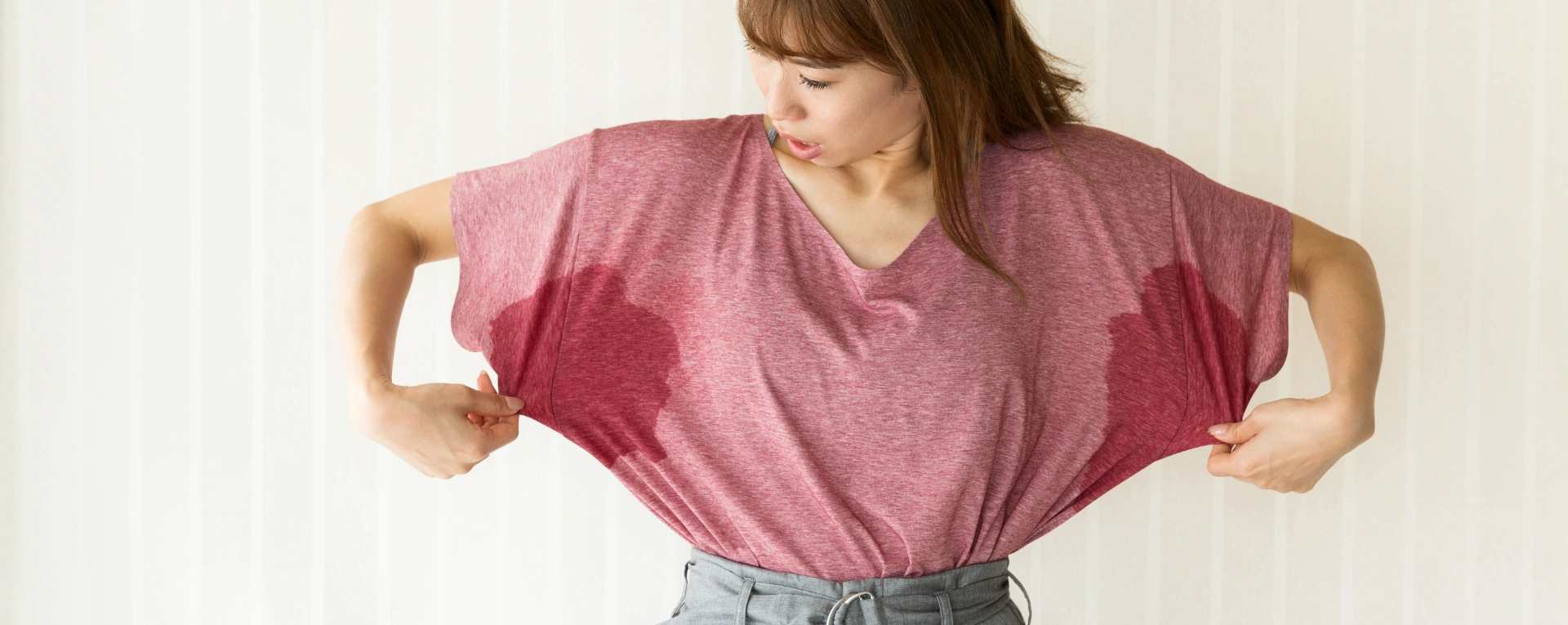
Hyperhidrosis is broadly classified into primary focal hyperhidrosis and secondary generalised hyperhidrosis, each with distinct causes and patterns of occurrence.
If excessive sweating interferes with daily life, persists despite using over-the-counter antiperspirants, or is accompanied by other concerning symptoms such as sudden onset night sweats or unexplained weight loss, seeking medical evaluation is essential.
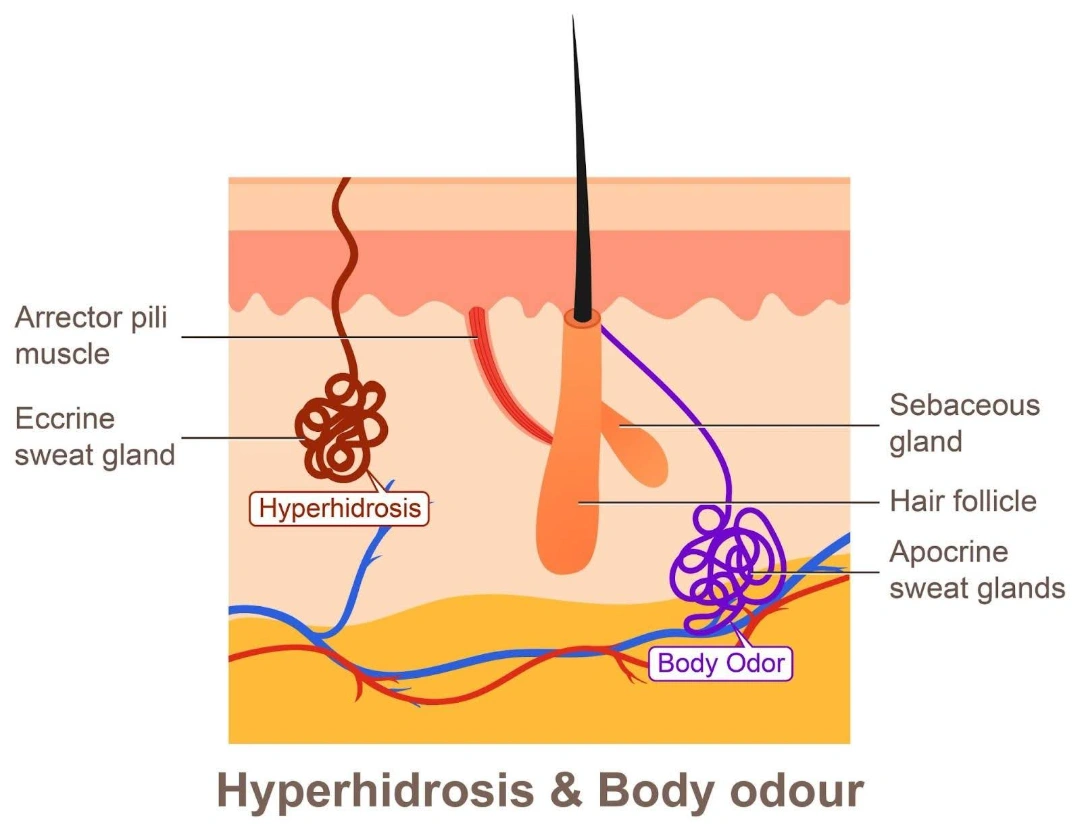
Hyperhidrosis is primarily caused by overactivity of the autonomic nervous system, specifically the sympathetic nervous system, which regulates involuntary bodily functions, including sweating. This excessive sweating occurs even when the body does not require cooling, distinguishing hyperhidrosis from normal perspiration linked to heat or physical exertion.
Sweating is controlled by the eccrine sweat glands, which are densely concentrated in the palms, soles, underarms, and face. These glands are activated by signals from the brain via the sympathetic nervous system, a branch of the autonomic nervous system responsible for the body's fight-or-flight response.
Unlike primary hyperhidrosis, secondary generalised hyperhidrosis is caused by an underlying medical condition or external factor, leading to excessive sweating over large areas of the body. This form often occurs suddenly and may continue even during sleep.

Hyperhidrosis is characterised by excessive, uncontrollable sweating that goes beyond what is necessary for regulating body temperature. The condition can affect specific areas of the body (focal hyperhidrosis) or occur more generally (generalised hyperhidrosis). In addition to persistent sweating, individuals may experience a range of physical, emotional, and social challenges. Common signs & symptoms include:
If these symptoms significantly impact your quality of life, seeking professional assessment and treatment can help manage hyperhidrosis effectively.
Hyperhidrosis can affect individuals of all ages and backgrounds, but certain factors may increase the likelihood of developing this condition. In Singapore’s hot and humid climate, excessive sweating can be particularly distressing, making symptoms more pronounced. While hyperhidrosis can occur without a known cause (primary hyperhidrosis), some individuals may be at higher risk due to genetic, medical, or environmental factors.
Factors that increase the risk of hyperhidrosis include:
At Cove Aesthetic Clinic, we take a personalised approach to diagnosing hyperhidrosis, so we can identify the exact cause of excessive sweating and recommend the most effective treatment.
Our specialists conduct a comprehensive evaluation, considering your symptoms, medical history, and lifestyle factors to determine whether your condition is primary focal hyperhidrosis or secondary hyperhidrosis linked to an underlying medical issue. This can include:
By taking a thorough and individualised approach, we ensure that every patient receives an accurate diagnosis and a personalised treatment plan.