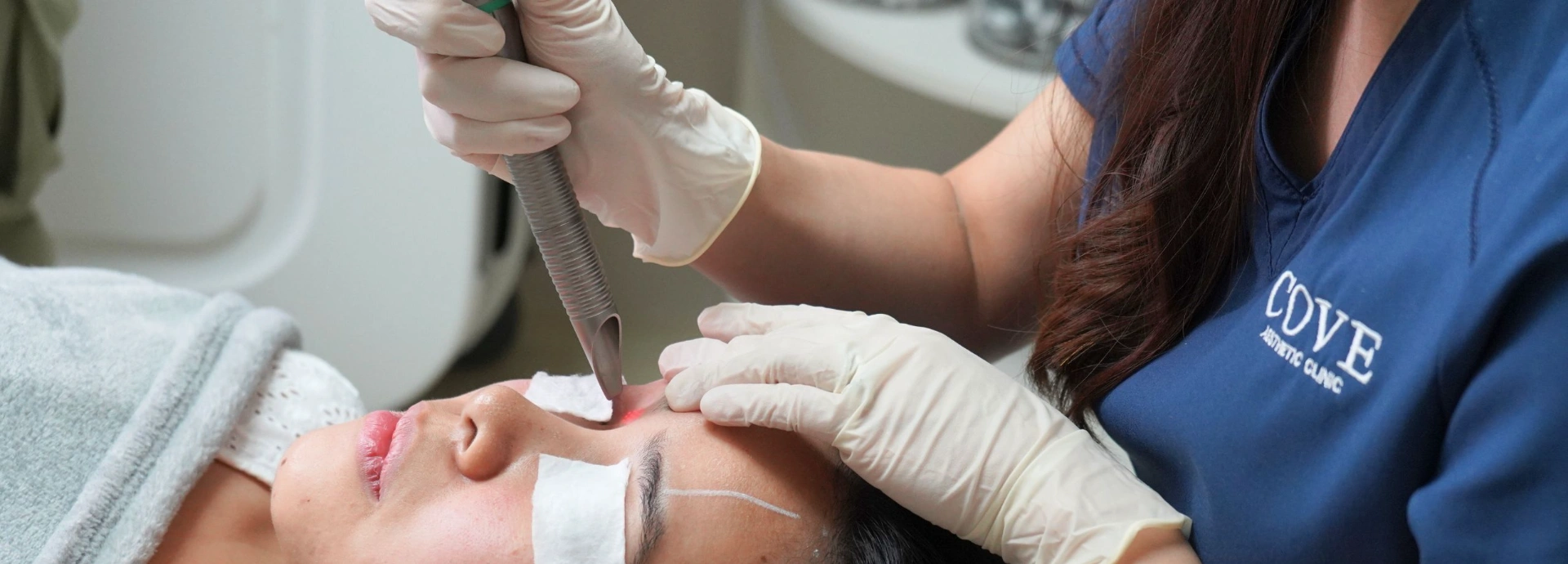
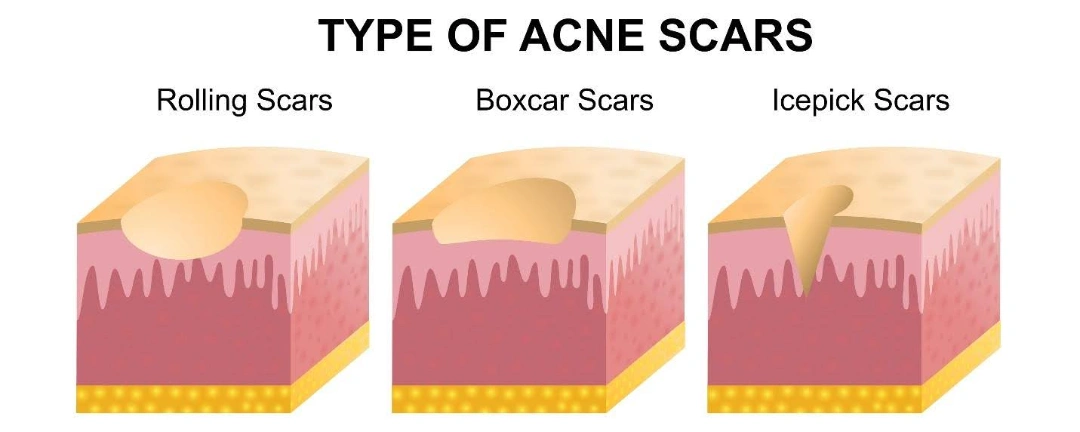
These scars occur when the skin loses tissue during the healing process, leading to depressions or indentations. The main subtypes include:
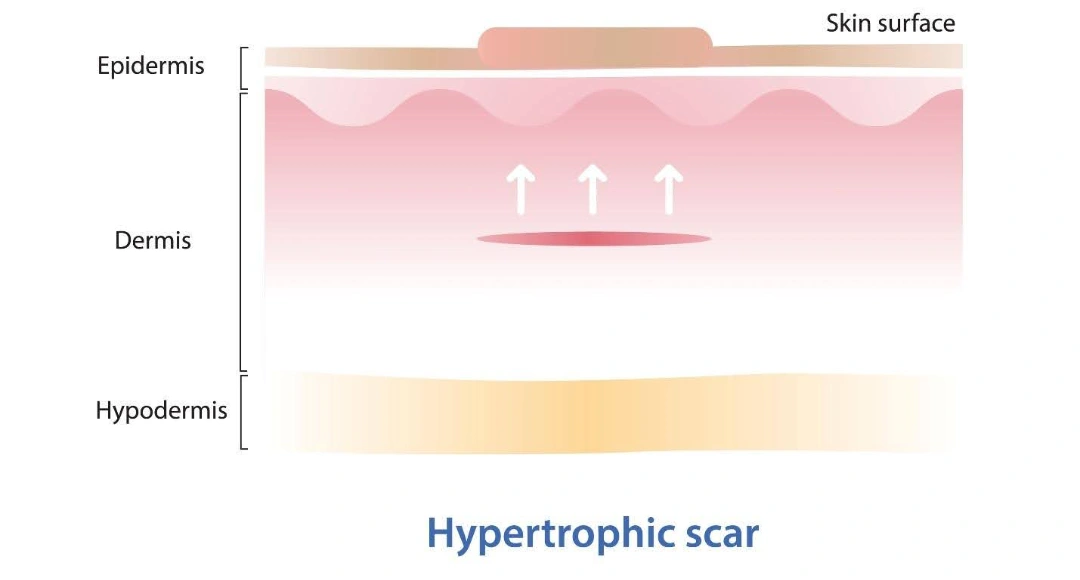
Hypertrophic scars form when the skin produces excessive collagen during the wound-healing process, resulting in thick, raised scars. These scars remain within the original acne lesion’s boundary, and may feel firm or rubbery to the touch. They are more commonly seen in areas like the chest, back, jawline, and shoulders, where the skin is thicker, and acne lesions tend to be deeper.
Keloid scars are an aggressive form of hypertrophic scars that grow beyond the original wound site. They occur when the skin overproduces collagen in response to inflammation, leading to thick, raised, and sometimes itchy or painful scar tissue. Keloids are more common in individuals with darker skin tones, and often develop on the chest, shoulders, and jawline.
PIH is a skin discolouration that occurs after an acne lesion heals, leaving behind dark brown, red or purple marks. Although PIH is not a true scar, it can take weeks or even months to fade, especially in individuals with darker skin tones, who are more prone to pigmentation changes. This happens due to excess melanin production triggered by inflammation. Sun exposure can worsen PIH, making it essential to use sun protection.
| CAUSES | DESCRIPTION |
| Insufficient collagen production | When the skin does not produce enough collagen during the healing process, it leaves behind depressions or indentations known as atrophic scars. Deep inflammation from severe acne destroys collagen fibres. If the body fails to regenerate enough collagen, the skin surface remains uneven. |
| Excess collagen production | In some cases, the body overproduces collagen when repairing acne damage. This results in hypertrophic or keloid scars, which are thick and raised. Intense or prolonged inflammation overstimulates fibroblasts, creating too much collagen and leaving bumpy skin behind. |
| Excess melanin production | Acne can trigger post-inflammatory hyperpigmentation (PIH), where dark marks remain even after the blemish heals. Inflammation stimulates melanocytes to produce excess pigment , resulting in brown, red, or purple spots that can take months to fade. |
| KEY FACTORS | DESCRIPTION |
| Severe or cystic acne |
|
| Picking or squeezing the pimples |
|
| Genetic predisposition |
|
| Skin type and tone |
|
| Slow wound healing or sensitive skin |
|
| Delayed or improper treatment |
|
| Frequent sun exposure without protection |
|
Diagnosing acne scars is a straightforward procedure that typically starts with a professional skin assessment. This step is crucial as it helps to determine the type, and severity of acne scars. Beyond a skin assessment, the diagnostic procedure may also entail:
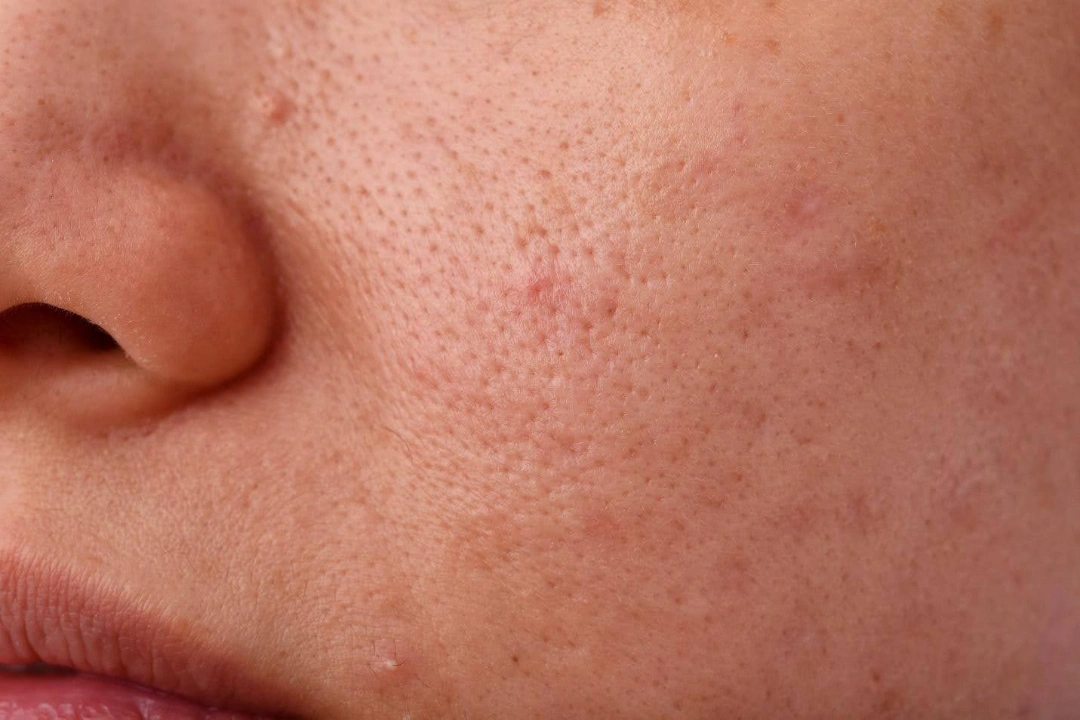
An aesthetic doctor is skilled at outlining personalised treatment plans designed to effectively reduce acne scars by improving skin texture, stimulating collagen production, and minimising pigmentation. They carefully assess each patient’s skin condition to recommend the most suitable approach.
Some of the available treatments may include one or a combination of the following:
Laser treatments use focused light energy to resurface the skin, promoting collagen production, and improving overall texture. This method is highly effective for atrophic scars, such as ice pick and boxcar scars, by encouraging new skin cell turnover as well as the following benefits:
Chemical peels use specially formulated acids to remove the outer layer of damaged skin, allowing fresh, healthier skin to emerge. These peels are particularly beneficial for PIH, and superficial scarring as they work to:
Subcision is a minor surgical procedure where a fine needle or cannula is used to break the fibrous bands anchoring depressed scars. This allows the skin to rise, reducing the depth of the scar over time by achieving the following outcome:

Since acne scars vary in type and severity, a personalised approach is essential for achieving the best results. At Cove Aesthetics, our aesthetic doctors carefully assess your skin, and recommend a tailored combination of treatments to ensure safe and effective scar reduction.
While acne scars can impact self-confidence, the right treatment plan can lead to significant improvements. With clinically proven, medical-grade solutions, you can restore a smoother, clearer complexion. Get in touch with us today to start your journey to achieving healthier, and more radiant skin.
Making simple lifestyle changes can help reduce under-eye puffiness and improve the overall appearance of the delicate skin beneath the eyes. Here are some natural ways to minimise under-eye bags:
While these lifestyle changes can help improve the appearance of under-eye bags, persistent puffiness may require medical treatment.
Treatments to minimise eye bags include: