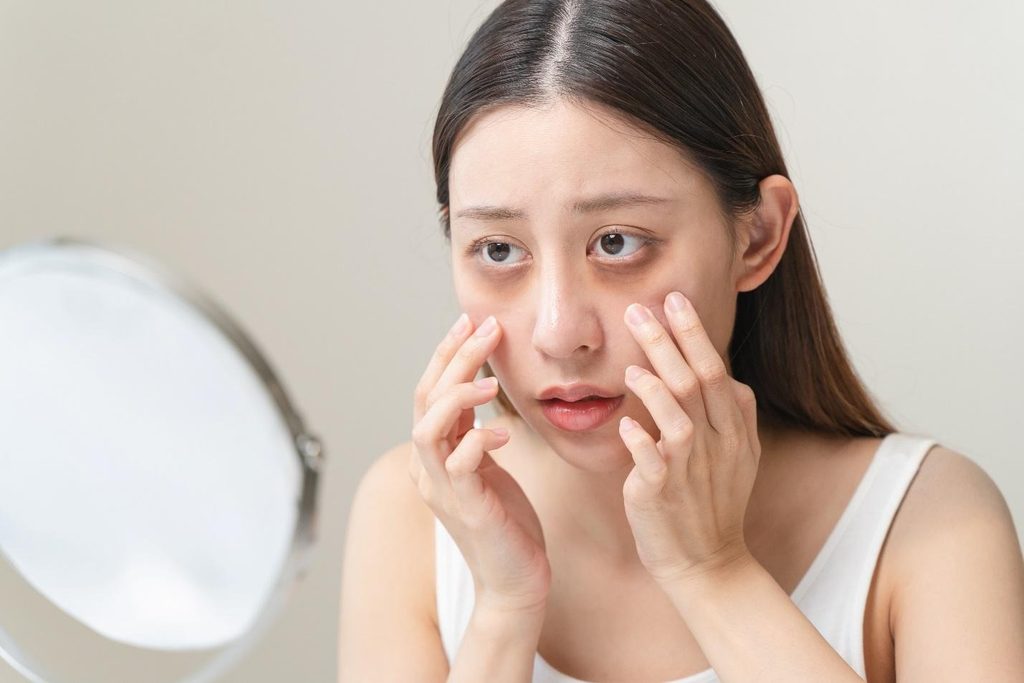
Dark eye circles can make you look tired even when you have had enough rest. However, the darkness beneath your eyes may not be caused by tiredness at all. Pigmentation, thin skin, visible blood vessels and tear trough hollowing can each contribute to a darker under-eye appearance.
Because these concerns require different approaches, there is no single treatment that works for every type of dark eye circle. Identifying the main cause or combination of causes is the first step towards choosing an appropriate treatment.
Dark eye circles may develop due to excess pigmentation, visible blood vessels beneath thin skin, age-related collagen loss or shadows created by under-eye hollowing. Allergies, irritation, sun exposure and lifestyle factors can also make them appear more noticeable.
Many people have more than one contributing factor, which is why identifying the underlying cause is important before selecting a treatment.
Read our guide on what causes dark eye circles for a closer look at the role of genetics, pigmentation, tiredness and facial anatomy.
The colour and appearance of your dark circles can provide clues about their cause. However, these features are not always reliable on their own, and more than one type may be present.
| Type | What it may look like | Main contributor |
| Pigmented | Brown or grey-brown discolouration that remains visible under different lighting | Excess melanin |
| Vascular | Blue, purple or reddish tones beneath the eyes | Blood vessels visible through thin skin |
| Structural | Darkness that becomes more or less noticeable depending on the lighting | Shadows caused by tear troughs or under-eye hollowing |
| Mixed | A combination of discolouration and shadowing | Multiple contributing factors |
During your assessment, our doctors will look at your skin thickness, pigmentation, facial anatomy, under-eye puffiness and how the darkness changes under different lighting. This provides a clearer picture of what is behind the darkness and which treatment may suit your needs.
The most suitable treatment depends on whether the darkness comes mainly from pigmentation, changes in the skin or shadows caused by volume loss. At Cove Aesthetic Clinic, our doctors may recommend treatments that target colour, support collagen production, improve hydration or soften under-eye hollowing.
Collagen Eye Laser may be considered when thin or ageing under-eye skin is making underlying blood vessels and shadows more visible. The treatment uses laser energy to stimulate collagen remodelling, helping to improve skin firmness, texture and the appearance of fine lines over time.
It may be suitable for:
Results develop gradually as the skin produces and remodels collagen. Depending on your skin condition and treatment goals, a series of sessions may be recommended.
Collagen Eye Laser does not directly remove excess pigmentation or restore volume to a pronounced tear trough. If pigmentation or structural hollowing is the main concern, another treatment may be more suitable.
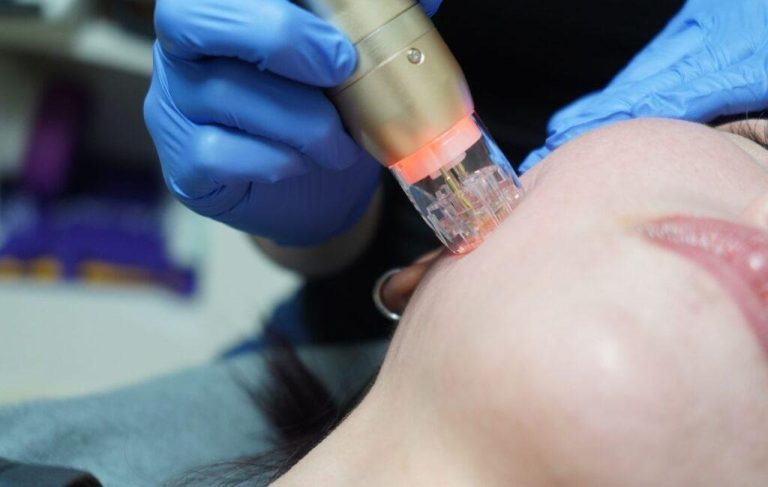
Gold-X combines microneedling with radiofrequency energy to support collagen and elastin production beneath the skin. It is primarily used when fine lines, crepey texture or mild laxity are making the under-eye area look more tired.
It may be suitable for:
During treatment, fine needles create controlled micro-injuries while delivering radiofrequency energy into the skin. This activates the skin’s repair response and supports gradual collagen remodelling. Research has explored radiofrequency microneedling for periorbital dark circles, particularly where skin quality contributes to their appearance.
Temporary redness, swelling, sensitivity or small treatment marks may occur afterwards. Results develop progressively, and a series of treatments may be recommended depending on your skin condition and treatment goals.
Gold-X does not restore volume to a tear trough or directly target excess melanin. Another treatment may be more appropriate when structural hollowing or pigmentation is the main cause of the darkness.
Bright Eye Laser may be considered when dark circles are primarily caused by excess pigmentation. These circles typically appear brown or grey-brown and remain visible under different lighting.
It may be suitable for:
The laser delivers energy that targets excess melanin within the skin. The body gradually clears the treated pigment, helping the under-eye area appear more even over time. Treatment settings are selected according to your skin type, the nature of the pigmentation and the sensitivity of the eye area.
Temporary redness, sensitivity or darkening of the treated pigment may occur after treatment. Pigmentation usually improves progressively, and several sessions may be recommended depending on its type, depth and extent.
Bright Eye Laser does not restore volume to a tear trough or address darkness caused mainly by thin skin and visible blood vessels. If several factors are contributing, it may form part of a combination treatment plan.
Some dark circles are caused or accentuated by a hollow between the lower eyelid and cheek. This hollow can create a shadow that makes the undereye area appear darker, particularly under overhead lighting.
Undereye filler may be suitable for:
During treatment, filler is carefully placed beneath the eyes to soften the hollow and create a smoother transition between the lower eyelid and cheek. This improves the contour responsible for the shadow rather than changing the colour of the skin.
The improvement may be visible shortly after treatment, although swelling must settle before the final result can be assessed. How long the result lasts varies according to the filler used, the amount injected and how the individual responds.
Temporary swelling, bruising, tenderness, lumpiness or asymmetry may occur. The under-eye area also has complex vascular anatomy, and filler carries rare but serious risks such as vascular occlusion. Careful assessment, product selection and injection technique are therefore important.
Undereye filler does not remove pigmentation or treat visible blood vessels beneath thin skin. It may also be unsuitable for patients with prominent eye bags, fluid retention or certain anatomical features.
Eye Skin Boosters are injectable treatments that focus on hydration and texture. They may be an option when the under-eye area looks dry, crepey or tired but does not require significant volume correction.
They may be suitable for:
Small amounts of an injectable formulation are placed within the skin to support hydration and improve its texture. The ingredients and intended effects vary between products, so our doctors will recommend an option based on your skin condition and concerns.
Temporary redness, swelling, tenderness, bruising or small injection marks may occur. Results and the recommended number of sessions depend on the formulation used and your individual response. Maintenance treatments may be recommended over time.
Unlike tear trough filler, Eye Skin Boosters are intended to improve skin quality rather than restore significant volume. They also do not directly remove pigmentation or correct pronounced under-eye hollowing.
There is no single best treatment for dark eye circles. The appropriate option depends on whether the main concern is pigmentation, skin quality, dehydration or structural hollowing.
| Main concern | Treatment option | What it addresses | Possible effects after treatment |
| Thin or ageing skin | Collagen Eye Laser | Collagen loss, fine lines and skin firmness | Redness or sensitivity, depending on the laser settings |
| Crepey texture or mild laxity | Gold-X | Skin texture, firmness and collagen remodelling | Temporary redness, swelling, sensitivity or treatment marks |
| Brown pigmentation | Bright Eye Laser | Excess melanin and uneven under-eye tone | Temporary redness, sensitivity or darkening of treated pigment |
| Dehydrated skin and fine lines | Eye Skin Boosters | Hydration and overall skin quality | Temporary swelling, bruising or injection marks |
| Tear trough hollowing | Undereye Filler | Volume loss and structural shadowing | Temporary swelling, bruising, tenderness or asymmetry |
This comparison is only a guide and should not be used to diagnose your dark circles. Our doctors can assess the colour, skin quality and structure of your under-eye area to determine which factor is contributing most to its appearance.
Dark eye circles often have more than one contributing cause. For example, pigmentation may occur alongside thin skin, while tear trough hollowing may create additional shadowing beneath an already darker under-eye area.
In these cases, our doctors may recommend a combination or staged treatment plan. Each treatment is selected to address a specific concern, such as using a pigment-targeting laser for discolouration and a separate treatment for skin quality or structural hollowing.
The focus is not on doing more, but on choosing treatments that address the concerns affecting your under-eye area without overtreating this delicate skin.
Not always. Treatment may reduce pigmentation, improve skin quality or soften shadows caused by under-eye hollowing, but the degree of improvement depends on the underlying cause.
Certain contributing factors, such as inherited facial anatomy, naturally thin skin and the ageing process, cannot be permanently eliminated. Dark eye circles may also have several causes, so treating one component may improve their overall appearance without removing the darkness completely.
The goal of treatment is therefore to achieve a noticeable but natural-looking improvement rather than promise complete or permanent removal.

Pigmentation, thin skin and tear trough shadows can create a similar-looking concern, but they do not respond to the same treatments.
At Cove Aesthetic Clinic, our doctors assess your under-eye skin, facial anatomy and treatment goals before recommending an individualised plan. This may include laser treatment, radiofrequency microneedling, Eye Skin Boosters, tear trough filler or a combination of treatments.
Schedule a consultation with Cove Aesthetic Clinic to learn which options may be suitable for you.
Our doctors assess the colour of the under-eye area, skin thickness and quality, visible blood vessels, tear trough depth, lower-eyelid puffiness and how the darkness changes under different lighting. This helps determine whether pigmentation, skin changes, structural shadowing or a combination of factors is contributing.
Sleep is only one factor that affects the under-eye area. Pigmentation, thin skin, visible blood vessels, facial anatomy and age-related volume loss can all cause persistent dark circles even when you are well rested.
Pigmentation usually remains visible under different lighting, while structural shadows may change depending on the direction of the light. However, both can occur together, so an assessment is more reliable than judging the cause by colour alone.
The number of sessions depends on the cause of your dark circles, the treatment selected and how your skin responds. Laser, radiofrequency microneedling and Eye Booster treatments may involve a series of sessions, while tear trough filler may produce a visible contour change after one appointment.
This varies according to the treatment. Pigmentation can recur, collagen and skin quality continue to change with age, and injectable treatments are gradually absorbed by the body. Maintenance treatment may be recommended to preserve the improvement.
No. Dark eye circles refer to discolouration or shadowing beneath the eyes, while eye bags describe bulging or puffiness of the lower eyelid. The two may occur together, and an eye bag can create a shadow that makes the under-eye area look darker.
At a glance:
| What causes dark eye circles | Genetics, pigmentation, visible blood vessels, ageing and lifestyle factors. |
| Are they always caused by poor sleep? | No. Fatigue often makes them more noticeable but is rarely the only cause. |
| Why do they vary from person to person? | Many people have a combination of contributing factors rather than a single cause. |
| How are they treated? | Treatment depends on the underlying cause and may involve collagen-stimulating or pigment-targeting treatments. |
| When should I see a doctor? | If your dark eye circles are persistent or you’re considering treatment, an assessment can help identify the most appropriate approach. |
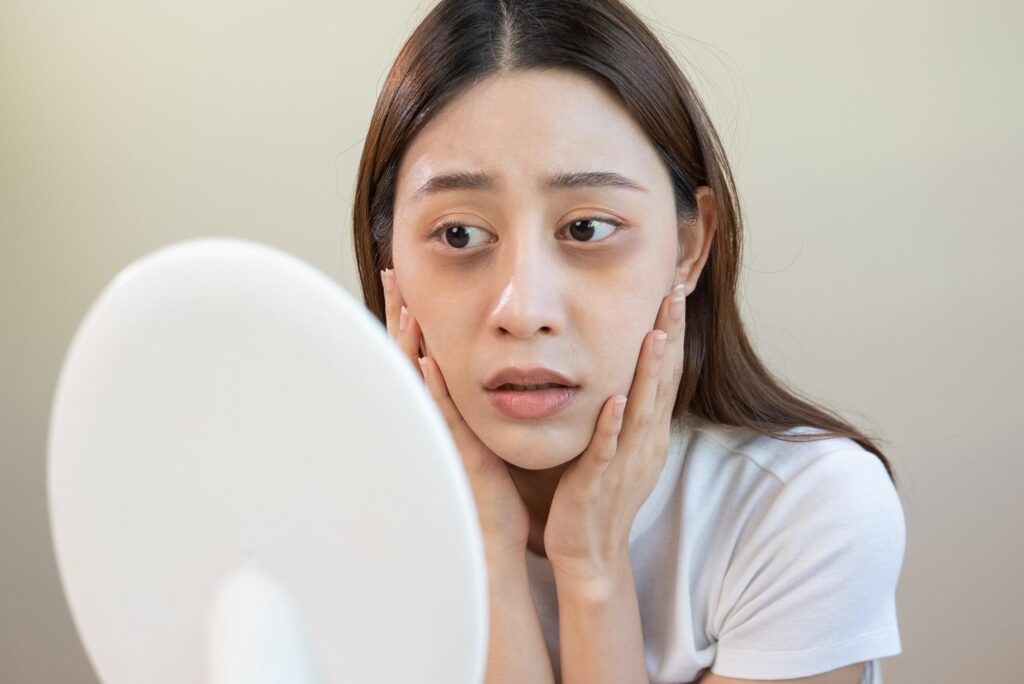
Dark eye circles are one of the most common concerns seen in aesthetic practice. They can make you look tired, stressed or older than you feel, even after a full night’s sleep. While many people assume they are simply the result of fatigue, persistent dark eye circles are often caused by a combination of genetics, pigmentation, facial anatomy and the natural ageing process.
Understanding the underlying cause is important because not all dark eye circles develop in the same way. For some people, excess pigmentation is responsible, while others have naturally thin under-eye skin, prominent blood vessels or tear troughs that create shadowing. In many cases, several factors contribute at the same time. Identifying which of these mechanisms are involved is the first step towards choosing the most appropriate treatment.
The most common causes of dark eye circles include:
Understanding which of these factors is responsible is important because treatment depends on the underlying cause. What works for pigmentation, for example, may not be effective for shadowing caused by tear troughs or age-related volume loss.
Some people are simply more predisposed to developing dark eye circles than others. Genetics can influence facial anatomy, skin thickness and melanin production, all of which affect the appearance of the under-eye area. For example, naturally thinner skin may make blood vessels more visible, while deeper tear troughs can create shadows that resemble pigmentation. This is why some people have noticeable dark circles from a young age despite getting enough sleep and maintaining a healthy lifestyle.
Pigmentation occurs when excess melanin accumulates beneath the eyes, causing the skin to appear brown or darker than the surrounding area. It may be influenced by genetics, sun exposure or repeated rubbing caused by allergies or eczema. Unlike shadows, pigmented dark circles represent a genuine change in skin colour and remain visible regardless of lighting conditions.
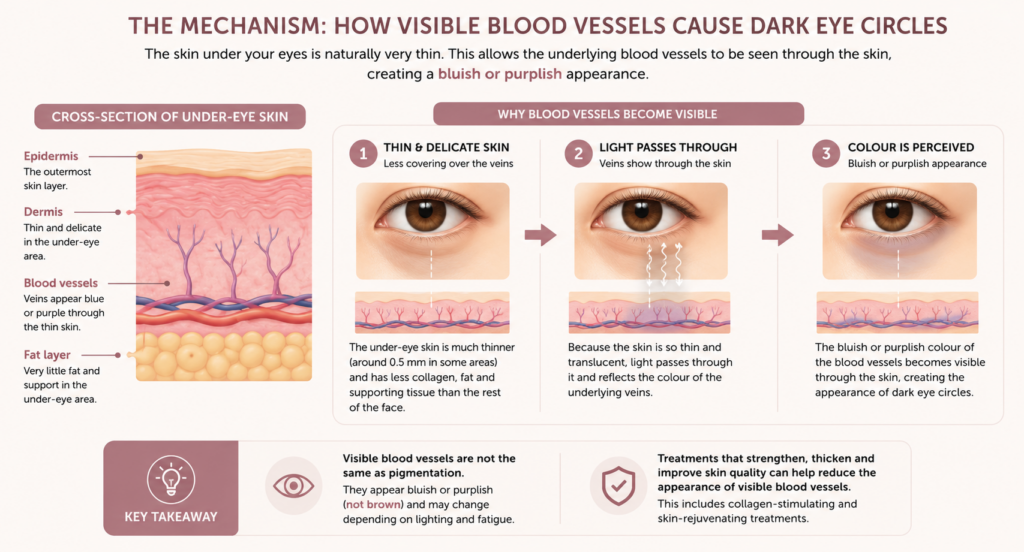
The skin beneath the eyes is naturally very thin, allowing the underlying blood vessels to show through. This can give the under-eye area a bluish or purplish appearance, particularly in individuals with fairer skin or naturally thinner skin. Visible blood vessels may also become more noticeable with age as collagen declines and the skin becomes increasingly translucent.
As we age, collagen production gradually declines, causing the skin beneath the eyes to become thinner and less supportive. At the same time, facial volume decreases, which can deepen the tear trough and create shadows beneath the eyes. Together, these changes can make dark eye circles appear more noticeable, even if they were less obvious when you were younger.
Lifestyle factors such as poor sleep, dehydration, allergies and smoking can make dark eye circles appear more noticeable, but they are rarely the sole cause. Instead, they tend to exaggerate existing pigmentation, visible blood vessels or shadows beneath the eyes. If your dark circles persist despite getting enough rest, there is likely to be an underlying factor contributing to their appearance.
Dark eye circles are rarely caused by a single factor. In many cases, they develop through a combination of genetics, pigmentation, visible blood vessels, age-related changes and lifestyle factors.
For example, someone may naturally have thin under-eye skin that makes blood vessels more visible, while also developing pigmentation from years of sun exposure. Another person may have inherited deeper tear troughs that become more pronounced as collagen declines with age.
Because several factors often overlap, there is no one-size-fits-all treatment for dark eye circles. Identifying the underlying causes is the first step towards recommending the most appropriate treatment plan for each individual.
There is no “best” treatment for dark eye circles because there is no single cause. The most appropriate treatment depends on whether your dark circles are caused by pigmentation, visible blood vessels, age-related changes, facial anatomy or a combination of these factors.
| Underlying cause | Possible treatment approach |
| Pigmentation | Pigment-targeting laser treatments |
| Visible blood vessels / Skin thinning | Treatments that stimulate collagen to improve skin thickness and overall skin quality |
| Age-related skin laxity | Treatments that tighten the skin and encourage collagen remodelling |
| Tear trough hollows or structural shadowing | Dermal fillers for suitable individuals |
| Dehydration or reduced skin quality | Eye boosters that support hydration and skin quality |
| Multiple contributing factors | A personalised treatment plan combining different treatment modalities |
At Cove Aesthetic Clinic, every treatment plan begins with a comprehensive assessment of your skin, facial anatomy and the underlying causes of your dark eye circles. By identifying whether pigmentation, skin thinning, structural changes or a combination of factors are involved, our doctors can recommend a personalised treatment plan designed to achieve natural-looking, refreshed results.
When dark eye circles are associated with thin skin, visible blood vessels or early signs of ageing, treatments that stimulate collagen may help improve the appearance of the under-eye area. By encouraging natural collagen production, the skin gradually becomes firmer and more resilient, helping to reduce the visibility of underlying blood vessels while improving overall skin quality.
The Collagen Eye Laser is a non-invasive treatment designed specifically for the delicate eye area. Using medical-grade laser technology, it stimulates collagen remodelling to improve skin firmness, soften fine lines and brighten tired-looking eyes. Because it works by strengthening and rejuvenating the skin rather than simply masking the problem, it can be an effective option for patients whose dark eye circles are related to skin thinning and age-related changes.
For individuals whose dark eye circles are associated with collagen loss, thinning skin or early signs of ageing, collagen-stimulating treatments may help improve the appearance of the under-eye area. Rather than targeting pigmentation directly, these treatments work by strengthening the skin and improving its overall quality.
Gold-X (link to service page) combines radiofrequency energy with microneedling to stimulate collagen and elastin production deep within the skin. Around the eyes, this may help improve skin firmness, soften fine lines and support the delicate under-eye skin, making blood vessels and shadowing less noticeable over time.
Depending on your concerns, Gold-X may be recommended on its own or as part of a personalised treatment plan.
In some individuals, dark eye circles are caused or accentuated by tear trough hollows and other structural features that create shadows beneath the eyes. Tear trough fillers may be used to restore volume beneath the eyes and soften the transition between the lower eyelid and cheek, making shadowing less noticeable.
When dark eye circles are primarily caused by pigmentation, the Bright Eye Laser may be considered. The treatment uses laser energy to target excess pigment around the eyes, helping to gradually improve uneven skin tone and reduce the appearance of darkened under-eye skin.
Eye boosters are injectable treatments intended to improve hydration and overall skin quality around the eyes. Depending on the formulation used, they may help support smoother, more hydrated skin and soften the appearance of fine lines, giving the under-eye area a more refreshed appearance.
Dark eye circles are not all the same, and the most effective treatment starts with understanding what is causing them. At Cove Aesthetic Clinic, our doctors perform a comprehensive assessment of your skin, facial anatomy and under-eye concerns before recommending a personalised treatment plan. Whether your dark eye circles are caused by pigmentation, skin thinning or age-related changes, we’ll help you find the most appropriate treatment for brighter, more refreshed-looking eyes.
Schedule a consultation with our doctors for an individualised assessment and treatment plan.
In most cases, dark eye circles are harmless and are related to genetics, pigmentation, facial anatomy or the natural ageing process. However, in some individuals, they may become more noticeable alongside certain medical conditions such as iron deficiency anaemia, thyroid disorders, eczema or chronic allergic rhinitis.
If dark circles develop suddenly, are accompanied by other symptoms or are causing concern, it is advisable to consult a healthcare professional to rule out any underlying medical condition before considering aesthetic treatment.
They can. As collagen production gradually declines with age, the skin beneath the eyes becomes thinner and loses structural support. At the same time, facial fat pads shift and tear troughs may deepen, creating shadows that make dark circles appear more noticeable.
The rate and severity of these changes vary between individuals and are influenced by genetics, lifestyle factors and cumulative sun exposure.
Both men and women can develop dark eye circles for the same underlying reasons, including genetics, pigmentation, visible blood vessels and ageing.
However, hormonal changes may influence how the under-eye area changes over time. For example, women often experience accelerated collagen loss around menopause [7], which can contribute to thinner skin and more noticeable tear troughs. Men, on the other hand, generally have thicker skin, although age-related volume loss and collagen decline still occur gradually.
Ultimately, the underlying cause is more important than biological sex when determining the most appropriate treatment approach.
Skincare products may improve certain causes of dark eye circles, particularly those related to pigmentation, dehydration or overall skin quality. Ingredients such as retinoids, vitamin C, niacinamide and caffeine may help brighten the skin, improve texture or temporarily reduce puffiness. However, skincare alone cannot correct deeper tear troughs, replace lost facial volume or significantly thicken skin that has become thinner through collagen loss.
Because dark eye circles often have multiple contributing factors, some individuals may require professional treatments in addition to a consistent skincare routine.
Yes, most aesthetic treatments improve the appearance of dark eye circles, but they do not stop the natural ageing process or permanently prevent future collagen loss and pigmentation changes. Depending on the underlying cause and the treatment performed, maintenance sessions may be recommended to help preserve results over time.
The colour of your dark eye circles can provide clues about the underlying cause. Brown dark circles are more commonly associated with excess pigmentation (melanin), while blue or purplish dark circles are often caused by visible blood vessels beneath thin under-eye skin. Some individuals have a combination of both, which is why a professional assessment is important before treatment.
Some causes of dark eye circles, such as genetics and the natural ageing process, cannot be prevented. However, protecting the skin from sun exposure, managing allergies, avoiding excessive eye rubbing, getting adequate sleep and maintaining good skin health may help reduce factors that can make dark circles appear more noticeable.
Doctors assess several factors, including your skin colour, skin thickness, facial anatomy, tear trough depth and the colour of the under-eye area. They may also ask about your medical history, allergies, family history and lifestyle. This comprehensive assessment helps determine whether pigmentation, visible blood vessels, age-related changes or multiple factors are contributing to your dark eye circles.

As we age, skin laxity gradually becomes more noticeable, the jawline softens, the cheeks begin to descend, fine lines and wrinkles become more apparent, and the skin loses some of the firmness it once had. Two treatments often come up in this conversation: thread lifts and radiofrequency (RF) skin tightening. Although both are grouped under ‘non-surgical lifting’, they work very differently, and understanding the distinction matters when it comes to choosing the right approach for your skin.
A note from Cove Aesthetic Clinic: We specialise in non-invasive skin tightening treatments — we do not perform thread lifts. We’ve written this comparison to give you an honest, full-picture view of both options, including treatments you may need to seek elsewhere, so you can make a properly informed decision about your skin.
Skin ageing is not caused by a single factor. Rather, it develops gradually through a combination of biological changes and external influences that accumulate over time.
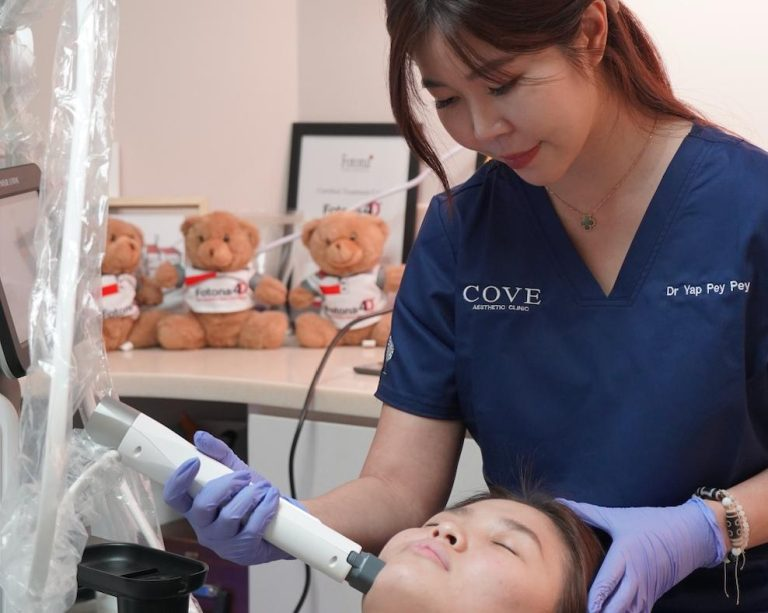
Radiofrequency skin tightening is a non-invasive treatment that uses controlled thermal energy to heat the deeper layers of the skin. This heat stimulates collagen remodelling [3] and encourages the production of new collagen fibres over time.
Unlike surgical procedures, RF treatments do not involve incisions or tissue repositioning. Instead, the goal is to gradually improve skin firmness, elasticity and texture through collagen stimulation. Modern RF technologies can deliver energy at varying depths depending on the device being used. Some systems target the superficial dermis, while others can penetrate deeper layers to address more significant laxity concerns.
At Cove Aesthetic Clinic, we offer XERF, a monopolar radiofrequency technology that delivers controlled thermal energy across multiple skin depths to stimulate collagen remodelling. Our doctor will assess your skin during consultation and advise whether XERF is the right approach for your concerns.
Because RF tightening works through collagen regeneration, improvements tend to appear progressively rather than immediately. Some individuals may notice mild tightening early on, but more visible changes often develop gradually over several weeks as collagen remodelling continues.
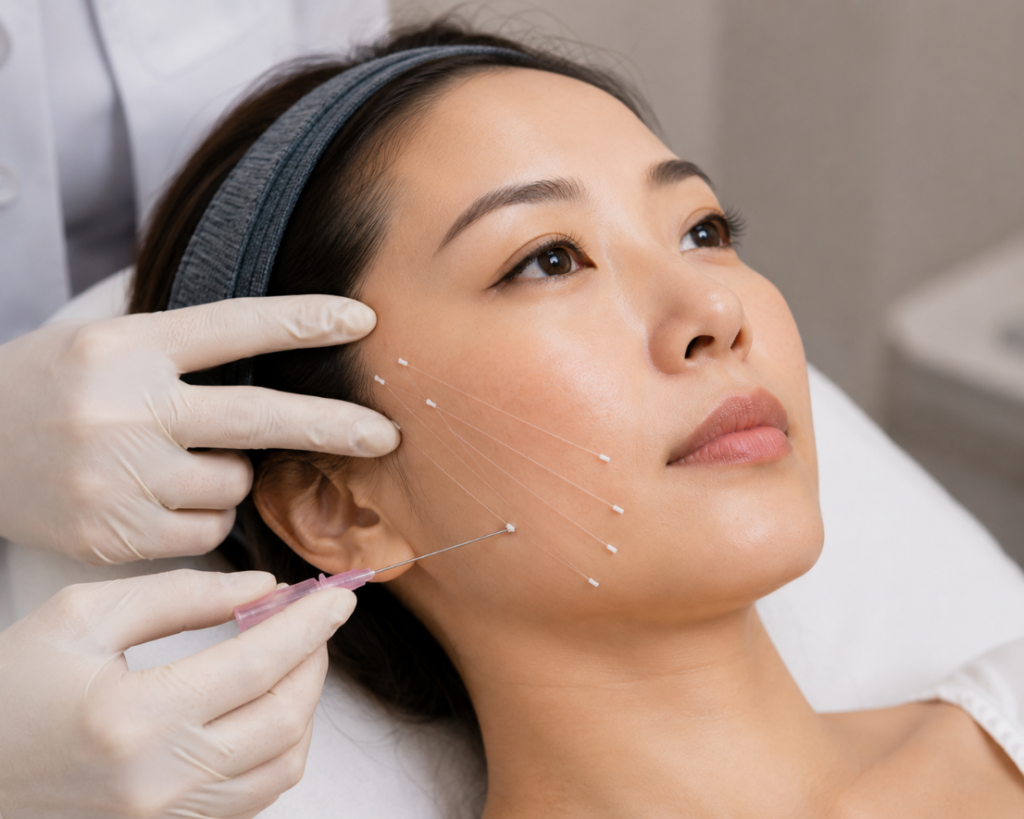
A thread lift is a minimally invasive procedure in which dissolvable threads are inserted beneath the skin to create a mechanical lifting effect. Depending on the thread type, the threads may contain small barbs or cones that anchor onto tissue and reposition sagging areas upward.
The threads may also stimulate some collagen production [4] as they dissolve over time. Different thread designs are used for different purposes: some are intended primarily for collagen stimulation and skin quality, while others focus on stronger lifting and tissue repositioning.
Thread lifts are considered a procedural treatment and typically involve more downtime than non-invasive options. Mild swelling, bruising and tenderness are common in the days following the procedure. As with any minimally invasive treatment, results depend heavily on patient selection, the degree of laxity being addressed, and clinical technique.
Thread lifts are not a treatment we perform at Cove Aesthetic Clinic. The information above is provided for educational purposes, to help you understand how this option works and how it compares to RF skin tightening.
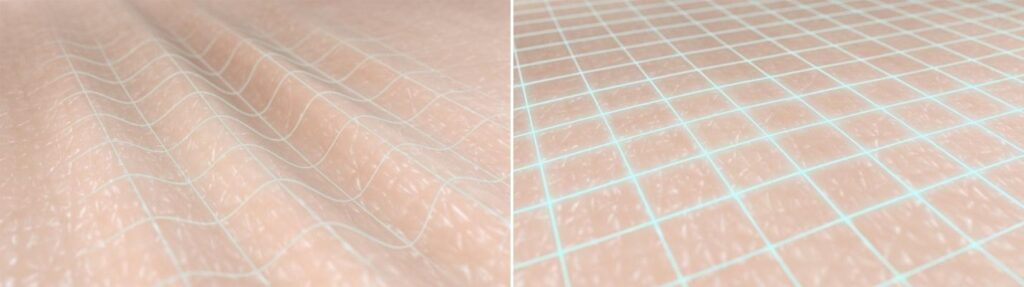
Both treatments address skin laxity, but they work in fundamentally different ways: one lifts and repositions, while the other rebuilds from within.
| Thread Lift | RF Skin Tightening | |
| How it works | Absorbable threads inserted under the skin to physically lift and reposition tissue | Radiofrequency energy heats the deeper layers of skin to stimulate collagen production |
| Type of procedure | Minimally invasive (needles/cannula) | Non-invasive |
| Downtime | A few days to a week | Minimal to none |
| Results | Immediate lift, improves further as collagen builds | Gradual. Develops over weeks to months |
| Best for | Moderate to significant laxity, visible sagging | Mild to moderate laxity, skin quality and tightening |
| Approximate duration* | 1–2 years | 1–2 years with maintenance |
| Discomfort | Local anaesthetic used; some soreness after | Warm sensation during treatment, generally well tolerated |
*Results vary depending on individual skin condition, age, lifestyle factors, and treatment plan.
The right treatment depends on your skin condition, how much laxity you’re dealing with, and what kind of experience you’re looking for.
Thread lifts are generally considered for patients with moderate to significant laxity who want an immediate, mechanical lift and who are comfortable with a minimally invasive procedure and a few days of downtime. This is a treatment best discussed with a provider who performs it.
RF skin tightening tends to suit patients at an earlier stage of laxity who prefer a non-invasive approach with minimal downtime. It works progressively through collagen stimulation, making it a good fit for those who want gradual, natural-looking improvement or who want to maintain results over time. At Cove Aesthetic Clinic, this is the treatment approach we specialise in.
A few questions worth considering before deciding:
The most reliable next step is always a consultation with an aesthetic doctor, who can assess your skin in person and recommend the most appropriate path, whether that’s RF tightening, a referral for thread lift, or a combination approach.
Some patients with both structural laxity and reduced skin quality may benefit from a combination of the two treatments, as they address different aspects of facial ageing. In clinical practice, RF tightening is often used to improve skin firmness and collagen density, while thread lifts provide the mechanical repositioning that collagen stimulation alone cannot achieve.
This kind of combination approach is something that would need to be assessed and planned by a doctor who offers both treatments. If your consultation suggests that a combination approach, including thread lifts, may better address your concerns, our doctors will explain your options and guide you on the most appropriate next steps.
Skin sagging is a gradual process: by the time it becomes visible, the underlying changes have often been accumulating for years. Understanding the science behind it is the first step toward addressing it effectively.
Whether your skin needs collagen stimulation, structural support, or simply a clearer picture of what’s happening beneath the surface, today’s aesthetic treatments offer targeted options for every stage of laxity.
During your consultation at Cove Aesthetic Clinic, our doctor will assess your skin laxity, discuss your aesthetic goals, and recommend the most appropriate treatment approach for where your skin is right now. If you have been considering treatment to contour your face and tighten your skin, schedule a consultation with us today.
The longevity of results depends on individual factors such as age, skin quality, and the degree of laxity. Thread lifts are generally understood to provide longer-lasting structural lifting, as the threads physically reposition tissue beneath the skin. RF treatments work through progressive collagen stimulation and typically require maintenance sessions over time. Neither treatment produces permanent results, and individual outcomes vary. A doctor can advise on what to realistically expect based on your skin.
RF skin tightening is non-invasive — it does not involve needles, threads, or incisions, which generally means lower procedural risk and minimal downtime. Thread lifts are minimally invasive and carry a different risk profile, including the possibility of bruising, swelling, asymmetry, or thread-related complications. Both treatments carry some level of risk and should only be performed by qualified medical professionals following a proper clinical assessment. The right choice depends on your skin, your health history, and your goals.
The number of sessions depends on your individual skin condition, the degree of laxity being addressed, and the RF technology used. At Cove, our doctor will assess your skin during your consultation and recommend an appropriate treatment plan. Maintenance sessions are typically advised over time as collagen continues to remodel and natural ageing progresses.
Some RF devices are designed primarily for skin tightening, while others may also affect fat layers depending on the depth and intensity of energy delivered. In certain individuals, deeper RF treatments may contribute to some fat reduction alongside collagen stimulation. Whether this is desirable depends on the patient’s facial anatomy and goals. For patients who already have lean facial volume, this may not be appropriate. Treatment selection and energy settings are tailored accordingly.
Overcorrection or excessive lifting during a thread lift procedure can result in visible irregularities, unnatural tightness, or an unnatural facial contour. When performed conservatively by an experienced practitioner with appropriate patient selection, thread lifts are generally intended to produce subtle lifting while maintaining natural facial movement. As with any procedure, outcomes depend heavily on technique, patient suitability, and expectations.
RF tightening can help with mild early jowling by stimulating collagen and gradually improving skin firmness around the jawline. For more pronounced jowls, where deeper tissue descent is involved, collagen stimulation alone may not produce sufficient improvement, and structural lifting options may need to be considered. The most appropriate approach depends on the severity of laxity and the underlying cause, which is something our doctor can assess during your consultation.
Whether thread lift and RF treatments can be combined in the same session is a clinical decision that depends on the individual patient’s skin condition and the extent of treatment planned. This is a question best directed to the provider performing the thread lift, as Cove does not offer this procedure. If you are exploring a combination approach, our doctor can advise on what role RF tightening might play in your overall plan.
1. Quan, T., Qin, Z., Xia, W., Shao, Y., Voorhees, J. J., & Fisher, G. J. (2009). Matrix-degrading metalloproteinases in photoaging. The journal of investigative dermatology. Symposium proceedings, 14(1), 20–24. https://doi.org/10.1038/jidsymp.2009.8
2. Arnal-Forné, M., Molina-García, T., Ortega, M., Marcos-Garcés, V., Molina, P., Ferrández-Izquierdo, A., Sepulveda, P., Bodí, V., Ríos-Navarro, C., & Ruiz-Saurí, A. (2024). Changes in human skin composition due to intrinsic aging: a histologic and morphometric study. Histochemistry and cell biology, 162(4), 259–271. https://doi.org/10.1007/s00418-024-02305-w
3. Meyer, P. F., de Oliveira, P., Silva, F. K. B. A., da Costa, A. C. S., Pereira, C. R. A., Casenave, S., Valentim Silva, R. M., Araújo-Neto, L. G., Santos-Filho, S. D., Aizamaque, E., Araújo, H. G., Bernardo-Filho, M., Carvalho, M. G. F., & Soares, C. D. (2017). Radiofrequency treatment induces fibroblast growth factor 2 expression and subsequently promotes neocollagenesis and neoangiogenesis in the skin tissue. Lasers in medical science, 32(8), 1727–1736. https://doi.org/10.1007/s10103-017-2238-2
4. Soen, M., Hidayat, M., & Widowati, W. (2025). Enhancing dermal collagen density towards youthfulness: A comparative study of PCL, PLLA, and PDO thread implantation in aging rats model. Iranian journal of basic medical sciences, 28(2), 151–157. https://doi.org/10.22038/ijbms.2024.80494.17428
5. Kim J. (2024). Comparative Three-dimensional Analysis of Facial Lifting Effects across Five Aesthetic Units following Continuous Radiation 115-Watt 6.78-MHz Monopolar Radiofrequency Therapy. Plastic and reconstructive surgery. Global open, 12(9), e6137. https://doi.org/10.1097/GOX.0000000000006137
6. Hong, G. W., Kim, S. B., Park, S. Y., Wan, J., & Yi, K. H. (2024). Thread Lifting Materials: A Review of Its Difference in Terms of Technical and Mechanical Perspective. Clinical, cosmetic and investigational dermatology, 17, 999–1006. https://doi.org/10.2147/CCID.S457352
7. Cohen, J. L., Rivkin, A., Dayan, S., Shamban, A., Werschler, W. P., Teller, C. F., Kaminer, M. S., Sykes, J. M., Weinkle, S. H., & Garcia, J. K. (2022). Multimodal Facial Aesthetic Treatment on the Appearance of Aging, Social Confidence, and Psychological Well-being: HARMONY Study. Aesthetic surgery journal, 42(2), NP115–NP124. https://doi.org/10.1093/asj/sjab114
8. Li, K., Meng, F., Li, Y. R., Tian, Y., Chen, H., Jia, Q., Cai, H., & Jiang, H. B. (2022). Application of Nonsurgical Modalities in Improving Facial Aging. International journal of dentistry, 2022, 8332631. https://doi.org/10.1155/2022/8332631

Hair removal is easily one of the most popular procedures in the realm of aesthetics. It is the 3rd most common [1] non-surgical cosmetic procedure worldwide. Many individuals are drawn to the plethora of permanent hair removal advertisements without knowing that the promise of permanence comes with a caveat. In this article, I explain the realities of laser hair removal in Singapore, helping readers make informed decisions for smooth, hair-free skin.

Laser hair removal, not to be confused with Intense Pulsed Light therapy (IPL), is a medically approved procedure [2] for removing unwanted hair on various parts of the body, such as the armpits, face, legs, arms, and bikini area. It works by targeting and damaging hair follicles, hindering their ability to grow.
During the procedure, medical-grade laser devices emit a concentrated beam of light or laser in the form of photons. These photos are absorbed by melanin – the pigment responsible for giving our skin and hair colour. Laser hair removal works via a process known as selective photothermolysis [3]. This means that the laser or photons are selectively absorbed by dark melanin, thereby preserving the lighter surrounding skin. When absorbed, the light energy converts to heat, destroying the hair follicles and preventing, slowing, or reducing hair growth.

Laser hair removal effectively reduces hair growth, with patients experiencing approximately 50-70% reduction of hair [4]. This effectiveness depends on three main factors: hair growth cycle, skin and hair colour, and hormones.
Hair growth cycle
Our hair goes through a cyclical process where hair continuously grows and sheds. This process is broken down into four phases:

Laser hair removal is the most effective on hair in the anagen phase [9] when hair is actively growing, and the follicle is firmly attached to the root. However, laser hair removal is the least effective on hair in the catagen, telogen, or exogen phase. In these phases, hair is not actively growing; the follicle is inactive and detached from the hair bulb, so the laser cannot effectively target the stem cells directly responsible for producing new hair.
Skin and hair colour
Lasers for hair removal are designed to work by targeting melanin through a process called selective photothermolysis [3]. This means it explicitly targets darker hair with more melanin, leaving the lighter surrounding skin untouched. Hence, laser hair removal is more effective in individuals with darker hair and lighter skin tone combinations. The impact of skin tone and hair colour are as follows:

Hormones
The last factor that plays a significant role in the effectiveness of laser hair removal is hormones. Hormones have the following effect:
So, to answer the burning question, is laser hair removal permanent? Yes, it CAN be permanent when performed with expertise, offering a highly effective and long-lasting solution for significant hair reduction.
At Cove Aesthetic Clinic, we believe a synergistic approach is key to permanent hair removal. Our methods incorporate an in-depth understanding of the factors that affect hair growth, bespoke multimodal treatment plans, and accurate laser selection and customisation.
One thing advertisements don’t tell you is that not all lasers are created equal. Different lasers have different wavelengths and different principles of operation. I have seen many lasers come and go, but the one that stands out for permanent hair reduction is the Fotona laser.
The Fotona Laser ensures permanent hair reduction; it comprises the Nd:YAG laser with a three-dimensional treatment pattern using FRAC3 technology. The Fotona Laser incorporates pulse-control technology and combines selective homogenous photothermolysis, ensuring effective and long-lasting hair reduction. Let’s take a look at how it works:

Proper laser wavelength selection coupled with pulse duration and fluence or energy density is pivotal in ensuring safe and effective hair removal [14]. Pulse duration, or pulse width, is the time a laser targets an area and must align with the thermal relaxation time (TRT), which is the cooling time for hair follicles [16]. If the pulse duration is too short (under 10 ms), it won’t heat the follicle enough, making the treatment ineffective. If it is too long (over 100 ms), it may cause burns. Additionally, the fluence must be high enough to damage the follicle without burning the skin, which is especially important for dark skin tones and dense hair areas, where lower fluence can prevent irreversible thermal damage.
The delicate balance of these factors emphasises the importance of selecting an experienced and proficient doctor for your laser hair removal needs. With my years of experience, I bring a wealth of medical knowledge and proficiency to the table. I prioritise safety and treatment personalisation to ensure effective hair removal while minimising risks for all my patients. While some clinics might offer laser hair removal with technicians, Cove Aesthetic Clinic offers a doctor’s expertise that significantly enhances the safety and effectiveness of the entire process.
Intense Pulsed Light, or IPL, is not technically a type of laser. Although both IPL and lasers use light energy to target hair follicles, they operate differently:
Therefore, while IPL can be used for hair reduction, it is not considered a type of laser for hair removal. Furthermore, lasers can only be performed by MOH-certified doctors, while IPL and other types of hair removal, such as SHR, do not require a qualified doctor to be used.
Although tempting, remember that advertisements are meant to draw you in. There are many hidden things that don’t actually make it on the billboard. Here’s what the advertisements don’t tell you about laser hair removal:
Laser hair removal is not permanent, but with an experienced practitioner, you can experience significant hair reduction.
Here are some advice I usually give my patients before they come in for a laser hair removal appointment:
Aftercare is essential for ensuring the best possible outcomes and minimising side effects. I recommend the following post-treatment care tips:
When performed by a qualified doctor, laser hair removal can be permanent. However, individuals should approach the treatment with realistic expectations and a clear understanding of the factors that contribute to its effectiveness. By debunking the myths and providing accurate information, I hope you are well-informed and can make educated decisions about your hair removal options.
Do you find yourself trying hair removal methods that don’t work? If so, speak to us today.