EXCESSIVE SWEATING (Hyperhidrosis)

Treatment at a Glance

TREATMENT TIME
FROM 15 - 30 minutes
DURATION
Up to 12 months
DOWNTIME
Minimal to none
NUMBING
Yes

WHAT IS Hyperhidrosis?

Hyperhidrosis is a medical condition characterised by excessive sweating that goes beyond the body’s natural need for thermoregulation. While sweating is essential for cooling down the body, individuals with hyperhidrosis experience persistent and uncontrollable sweating that can significantly impact their daily lives. The condition may affect specific areas such as the underarms, palms, soles, face, and scalp, or occur across larger regions of the body.

TYPES OF Hyperhidrosis

Hyperhidrosis is broadly classified into primary focal hyperhidrosis and secondary generalised hyperhidrosis, each with distinct causes and patterns of occurrence.

  • Primary Focal Hyperhidrosis — this form of hyperhidrosis is idiopathic, meaning it occurs without an underlying medical cause. It typically begins in childhood or adolescence and affects specific areas symmetrically, such as both palms or both underarms. Studies suggest that primary hyperhidrosis has a strong genetic component, as it is often seen in multiple family members. Unlike secondary hyperhidrosis, this type does not occur during sleep and is usually triggered by stress, heat, or emotional stimuli.
  • Secondary Generalised Hyperhidrosis — this type results from an underlying medical condition or external factors, such as infections, hormonal imbalances (e.g., hyperthyroidism, menopause), diabetes, neurological disorders, or certain medications. Unlike primary hyperhidrosis, secondary hyperhidrosis can cause excessive sweating over larger areas of the body and may also occur during sleep. Managing the underlying condition often helps alleviate the sweating symptoms.

If excessive sweating interferes with daily life, persists despite using over-the-counter antiperspirants, or is accompanied by other concerning symptoms such as sudden onset night sweats or unexplained weight loss, seeking medical evaluation is essential.

What causes hyperhidrosis?

Hyperhidrosis is primarily caused by overactivity of the autonomic nervous system, specifically the sympathetic nervous system, which regulates involuntary bodily functions, including sweating. This excessive sweating occurs even when the body does not require cooling, distinguishing hyperhidrosis from normal perspiration linked to heat or physical exertion.

The mechanism behind primary hyperhidrosis

Sweating is controlled by the eccrine sweat glands, which are densely concentrated in the palms, soles, underarms, and face. These glands are activated by signals from the brain via the sympathetic nervous system, a branch of the autonomic nervous system responsible for the body's fight-or-flight response.

  • Neurological overactivity — in individuals with primary focal hyperhidrosis, the brain mistakenly sends excessive nerve signals to the sweat glands, triggering disproportionate sweating even in the absence of heat or exertion. The sudomotor nerves, which are responsible for regulating sweat production, are hyperactive, leading to excessive gland stimulation. This hyperactivity is thought to originate in the hypothalamus, the brain region responsible for thermoregulation and autonomic function.
  • Genetic influenceresearch indicates that primary hyperhidrosis is hereditary, with 30–50% of affected individuals having a family history of excessive sweating. The condition follows an autosomal dominant inheritance pattern, meaning that a single affected gene from one parent may be sufficient to cause the disorder. Despite these genetic links, the specific gene responsible for hyperhidrosis has not yet been identified.
  • Dysregulation of the sympathetic nervous system — the sympathetic nervous system, which governs the body’s fight-or-flight responses, is overstimulated in people with hyperhidrosis. Acetylcholine, a neurotransmitter that facilitates nerve communication, is overproduced, excessively activating sweat glands. This leads to persistent sweating episodes, even in cool temperatures or at rest.
  • Eccrine gland dysfunction — the eccrine glands (responsible for thermoregulatory sweating) are normal in size and number in individuals with hyperhidrosis, but they are overstimulated due to excessive nerve activity. These glands are most responsive in areas where sweating is typically most noticeable; palms, soles, underarms, and face, which explains why hyperhidrosis often affects these regions.

Secondary hyperhidrosis — Excessive sweating caused by other underlying conditions

Unlike primary hyperhidrosis, secondary generalised hyperhidrosis is caused by an underlying medical condition or external factor, leading to excessive sweating over large areas of the body. This form often occurs suddenly and may continue even during sleep.
  • Endocrine Disorders
    • Hyperthyroidism — overproduction of thyroid hormones accelerates metabolism, which increases body heat and sweat production.
    • Diabetes — low blood sugar levels (hypoglycaemia) can activate the sympathetic nervous system, triggering excessive sweating.
    • Menopause — hormonal fluctuations, particularly decreasing oestrogen levels, can lead to sudden sweating episodes (hot flushes).
  • Neurological conditions — disorders affecting the autonomic nervous system, such as Parkinson’s disease, stroke, or spinal cord injuries, can disrupt sweat regulation. Some cases of head trauma or nerve damage have been linked to excessive or abnormal sweating patterns.
  • Infections & chronic illnesses — Tuberculosis, HIV, and other systemic infections can cause excessive sweating, particularly night sweats. Certain cancers, such as lymphoma, may trigger excessive perspiration due to inflammatory and metabolic changes in the body.
  • Medications & substancessome prescription drugs, including antidepressants (SSRIs), opioids, pain relievers, and hormonal treatments, list excessive sweating as a side effect. Caffeine, alcohol, and spicy foods can stimulate the sympathetic nervous system, worsening symptoms in individuals predisposed to hyperhidrosis.
Botulinum Toxin Injection for Hyperhidrosis Singapore
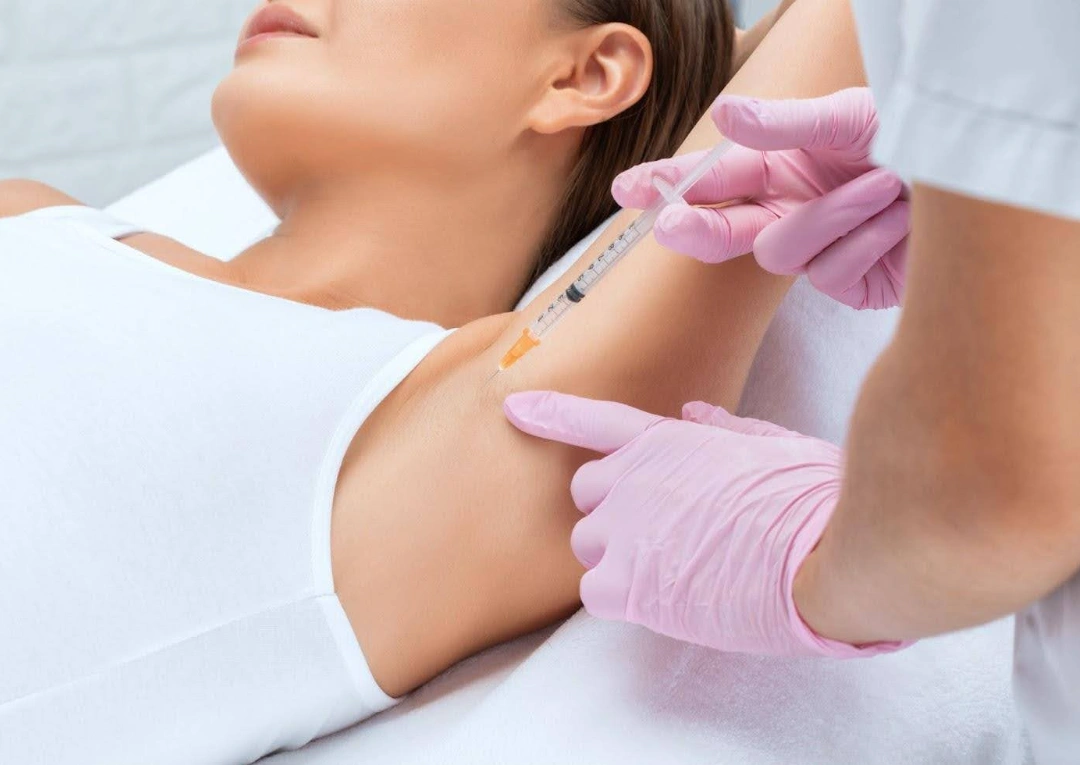
Botulinum toxin injections treat excessive sweating by blocking nerve signals that activate the sweat glands, which helps reduce perspiration in targeted areas.

What are the signs & symptoms of hyperhidrosis?

Hyperhidrosis is characterised by excessive, uncontrollable sweating that goes beyond what is necessary for regulating body temperature. The condition can affect specific areas of the body (focal hyperhidrosis) or occur more generally (generalised hyperhidrosis). In addition to persistent sweating, individuals may experience a range of physical, emotional, and social challenges. Common signs & symptoms include: 

  • Excessive sweating that occurs frequently, even in cool temperatures or at rest.
  • Sweating that is localised to specific areas such as the underarms, palms, soles, face, or scalp.
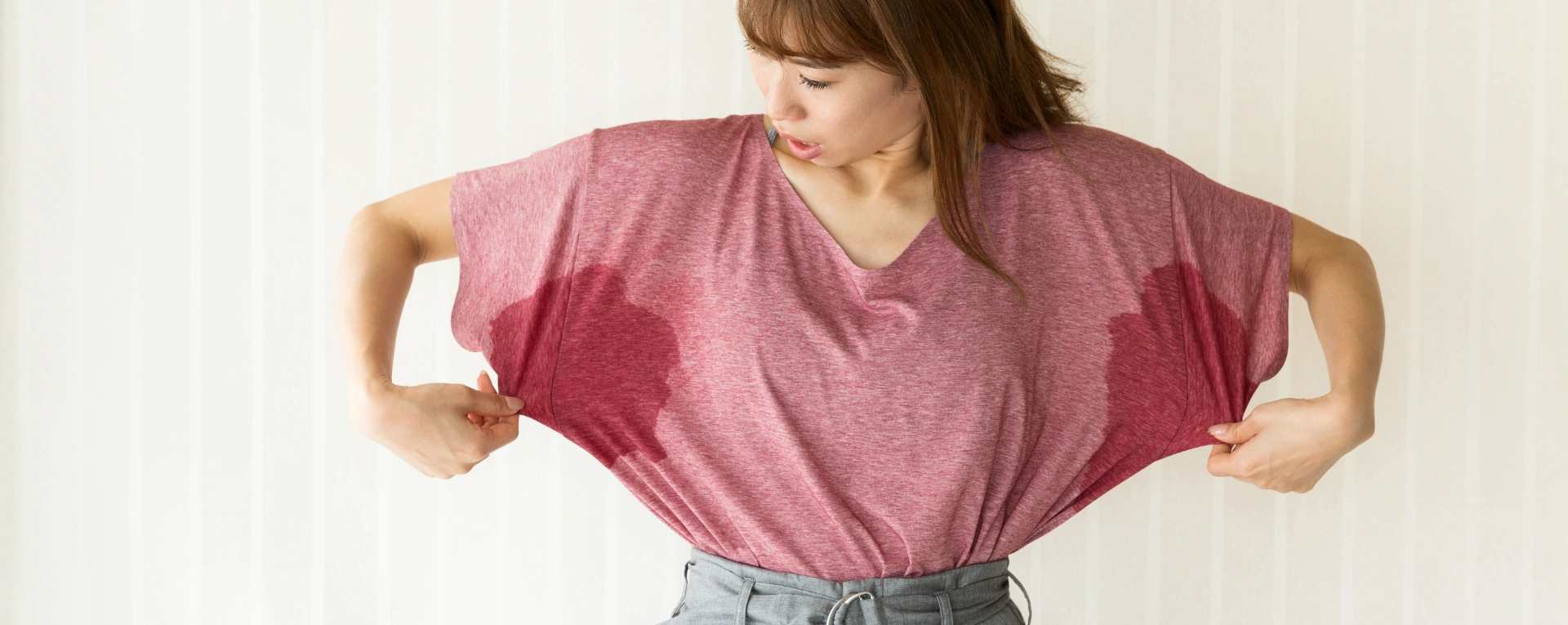
  • Visible sweat stains on clothing, often requiring frequent changes of attire.
  • Dripping sweat from the hands or face, making daily activities like writing or using a phone difficult.
  • Persistent dampness of the skin, leading to discomfort and an increased risk of bacterial or fungal infections.
  • Cold and clammy hands or feet, even in normal weather conditions.
  • Worsening of symptoms due to stress, anxiety, or nervousness, although sweating may also occur without any clear triggers.
  • Irritation and maceration of the skin, leading to redness, peeling, and possible rashes.
  • Foul body odour (bromhidrosis) due to prolonged moisture exposure creating a breeding ground for bacteria.
  • Difficulty gripping objects due to sweaty hands, affecting tasks like driving, holding a pen, or using electronic devices.

If these symptoms significantly impact your quality of life, seeking professional assessment and treatment can help manage hyperhidrosis effectively.
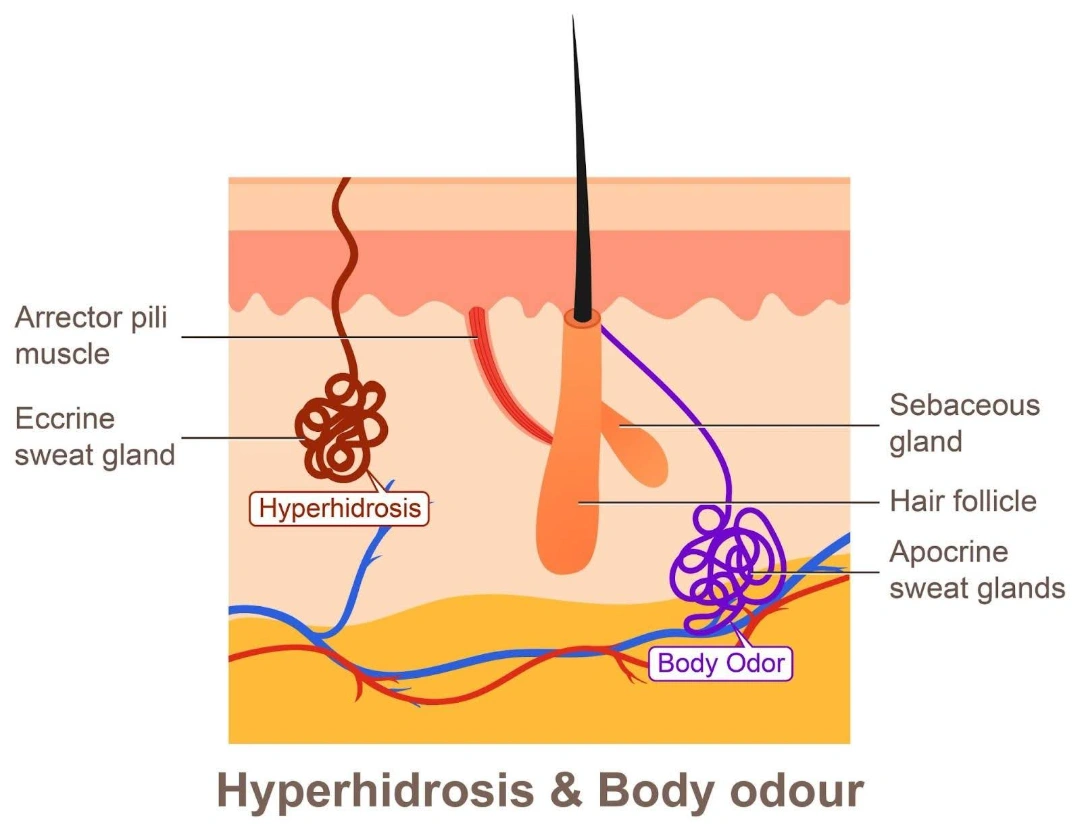
Symptoms of Hyperhidrosis Singapore
Excessive sweating causes body odour when bacteria on the skin break down sweat, releasing an unpleasant smell.

Book a consultation with us today for a detailed assessment and personalised treatment plan.

Hyperhidrosis can affect individuals of all ages and backgrounds, but certain factors may increase the likelihood of developing this condition. In Singapore’s hot and humid climate, excessive sweating can be particularly distressing, making symptoms more pronounced. While hyperhidrosis can occur without a known cause (primary hyperhidrosis), some individuals may be at higher risk due to genetic, medical, or environmental factors.

Factors that increase the risk of hyperhidrosis include: 

  • Family history — individuals with a parent or close relative who has hyperhidrosis are more likely to develop the condition due to a genetic predisposition.
  • Young adults and adolescents — primary focal hyperhidrosis typically begins in childhood or adolescence and can persist into adulthood.
  • People living in tropical climates — Singapore’s high humidity and warm temperatures can exacerbate excessive sweating, which makes the condition more noticeable and challenging to manage.
  • Individuals with high-stress lifestyles — those working in demanding or high-pressure jobs may experience worsened symptoms, as stress and anxiety can trigger excessive sweating.
  • Patients with underlying medical conditionsconditions such as hyperthyroidism, diabetes, menopause, or infections can lead to secondary hyperhidrosis.
  • Individuals taking certain medications — some antidepressants, painkillers, and hormonal treatments can cause excessive sweating as a side effect.
  • People with autonomic nervous system disordersneurological conditions like Parkinson’s disease or spinal cord injuries can disrupt the body’s ability to regulate sweating.
  • Athletes and physically active individuals — while sweating is normal during exercise, some individuals may experience excessive and prolonged perspiration beyond typical levels.

At Cove Aesthetic Clinic, we take a personalised approach to diagnosing hyperhidrosis, so we can identify the exact cause of excessive sweating and recommend the most effective treatment.

Our specialists conduct a comprehensive evaluation, considering your symptoms, medical history, and lifestyle factors to determine whether your condition is primary focal hyperhidrosis or secondary hyperhidrosis linked to an underlying medical issue. This can include:

  • Detailed Medical History & Symptom Assessment — we begin by discussing your symptoms, including when and where excessive sweating occurs, whether it affects daily activities, and if there is a family history of hyperhidrosis.
  • Clinical examination — our doctors examine the affected areas to assess the severity of sweating and check for any signs of skin irritation, maceration, or secondary infections.
  • Sweat tests — if necessary, we may conduct sweat production tests to measure excessive perspiration objectively:
  • Starch-iodine testan iodine solution is applied to the affected skin, followed by starch powder. Areas of excessive sweating turn dark blue, which helps us pinpoint the most problematic regions.

By taking a thorough and individualised approach, we ensure that every patient receives an accurate diagnosis and a personalised treatment plan.
At Cove Aesthetic Clinic, we provide safe and effective solutions to help you manage hyperhidrosis. One of the most reliable treatments we provide is botulinum toxin injections, an effective method that helps control excessive sweating by temporarily blocking the nerve signals that trigger sweat production.
  • Targets problematic areas —  Botulinum toxin injections are particularly effective for treating excessive sweating in the underarms, palms, soles, and forehead, helping to significantly reduce perspiration in these areas.
  • Quick & minimally invasive —  the procedure involves a series of small injections into the affected area, which takes only 15–30 minutes with minimal discomfort.
  • Blocks overactive sweat glands —  Botulinum toxin injections work by temporarily inhibiting the nerve signals that activate the sweat glands, which helps reduce excessive sweating without affecting normal bodily functions.
  • Long-lasting results —  most patients experience noticeable sweat reduction within a few days, with effects lasting 4 to 6 months before a repeat session may be needed.
  • Reliable & safe —  Botulinum toxin injections are FDA-approved and have been widely used worldwide to provide effective relief from excessive sweating.
If you are struggling with excessive sweating and looking for a trusted, non-surgical solution, botulinum toxin injections may be the answer. Book a consultation with us today to find out how we can help you regain confidence and comfort.

Frequently Asked Questions

Currently, there isn’t a cure for hyperhidrosis. However, various treatments can effectively manage and reduce excessive sweating, improving quality of life.
Sweat itself is odourless, but when it interacts with bacteria on the skin, it can produce a noticeable smell. This is particularly common in areas with many sweat glands, such as the underarms. ​

Hair-bearing skin can also contribute to body odour. Hair can trap sweat and create a warm, moist environment that encourages bacterial growth, increasing the likelihood of odour. In such cases, reducing hair in these areas — whether through shaving or laser hair removal — may help minimise body odour, especially when combined with good hygiene practices.
Yes, excessive sweating can increase the risk of skin infections, rashes, and maceration due to prolonged moisture exposure. It's important to maintain good hygiene and keep the skin dry to prevent these issues.​
Wearing breathable clothing, using antiperspirants, managing stress, and avoiding known triggers like spicy foods or caffeine can help reduce sweating episodes.​
Certain foods and beverages, such as spicy dishes, caffeine, and alcohol, can trigger or worsen sweating in some individuals. Monitoring and adjusting your diet may help manage symptoms.​
Excessive sweating can interfere with tasks like writing, gripping objects, or using electronic devices, and may lead individuals to avoid certain social or professional situations.​
Some individuals find relief through alternative methods such as acupuncture, although scientific evidence supporting their effectiveness is limited.​
If excessive sweating interferes with daily life, causes emotional distress, or starts suddenly, it’s advisable to consult a healthcare professional for evaluation and management.

NO TWO FACES ARE THE SAME, AND NEITHER ARE our treatments.

Customised treatment plans always work best. We tailor each treatment plan to your specific needs, ensuring you get the results you desire.  Our patient’s journey starts before their booking – and continues after their COVE experience.
Book an appointment
STEP ONE

Book a Consultation

We require new patients to attend a consultation with our doctors so we can better understand your aesthetic concerns. At Cove, we genuinely care for our patients. Consultations are in-depth, never rushed, and we will never recommend treatments that you do not need. Simply drop us a WhatsApp or a phone call to book an appointment!
STEP TWO

Come On Over

It’s time to come into COVE and meet us for your consultation! During this phase, we encourage you to maintain an open mind. While you may have a vision in mind, our doctors may offer different advice based on their assessment of your condition and desired treatment outcomes.
STEP THREE

Begin Your Transformation

You’ve consulted our Cove Experts, and the treatment plan has been discussed with you. We’re now ready to make your transformation happen! To ensure no time is wasted, we recommend starting your treatment in the same session as your consultation. You’ll love how each visit to COVE is a boost to your self-confidence! 

View More Concerns

BEGIN YOUR SKIN JOURNEY TODAY

BOOK AN Appointment

If you have any general enquires or would like to arrange a consultation with us, you may contact us by filling the following form.

    Wheelock Place | 501 Orchard Rd, #04-07, Singapore 238880
    Guoco Tower  | 7 Wallich Street, #B1-14, Singapore 078884

    WHEELOCK PLACE (ORCHARD)

    501 Orchard Rd, #04-07, Singapore 238880
    hello@coveaesthetics.com.sg
    (65) 6734 3977
    (65) 8082 0998
    Mon-Fri: 10:00am to 8:00pm

    Sat: 9:30am to 4:00pm 

    Closed on Sundays & PH

    GUOCO TOWER (TANJONG PAGAR)

    7 Wallich Street, #B1-14, Singapore 078884
    hello@coveaesthetics.com.sg
    (65) 8339 3518
    (65) 8339 3518
    Mon-Fri: 10:00am to 8:00pm

    Sat: 9:30am to 4:00pm 

    Closed on Sundays & PH
    Copyright © 2026 Cove Aesthetic Clinic. All Rights Reserved.
    Copyright © 2026 Cove Aesthetic Clinic.
    All Rights Reserved.
    chevron-down